Answering a common aquarium question: which gravel cleaner pump best suits your tank and needs? This guide highlights five reliable options for freshwater setups, ranging from compact siphons to all-in-one cleaners. It’s ideal for beginners seeking simple water changes to hobbyists needing deeper gravel cleanings. Best for small to medium tanks, feeders, and nano tanks; better for larger setups that demand stronger suction and more reach; choose this if you want a multi-function tool that minimizes effort; avoid this if you require ultra-quiet operation or compact, hand-pump simplicity.
Summary table of selected products
| Product | Best For | Key Benefit | Approx. Flow |
|---|---|---|---|
| Tetra Water Cleaner Gravel Siphon | beginners, small tanks | Easy setup and gravel cleaning | Not specified |
| hygger 360GPH Electric Gravel Cleaner | mid-size tanks, quick water changes | Powerful 360 GPH cleaning | 360 GPH |
| UPETTOOLS 6-in-1 Gravel Cleaner | versatile, mixed tanks | Six functions in one tool | 1700 L/H |
| FOUSIUTIM 530GPH Electric Cleaner | heavy debris, easy water changes | High suction, quiet operation | 530 GPH |
| AQQA 6-in-1 Cleaner | efficient maintenance | 6 functions, submersible pump | 320 GPH |
Tetra Water Cleaner Gravel Siphon for Aquariums
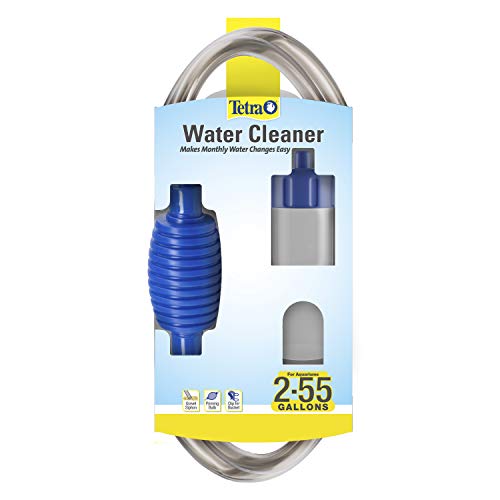
The Tetra gravel siphon is designed for easy maintenance in freshwater aquariums up to 55 gallons. It simplifies monthly water changes by enabling a 30% replacement in about 30 minutes. Best for beginners or hobbyists who want a straightforward tool for routine gravel cleaning and water changes.
Who it’s best for: small to medium tanks, beginners, or anyone preferring a simple, manual siphon. Why selected: minimal setup steps and reliable performance for standard maintenance.
Caution: effectiveness depends on gravity-based suction; use in a stable setup to avoid splash or spills.
hygger 360GPH Electric Gravel Cleaner
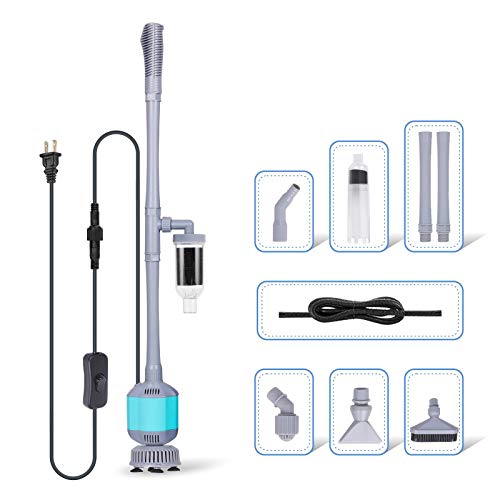
This 360 GPH cleaner offers a 5-in-1 design with adjustable length tubes, brush heads for corners, and a duckbill suction port for tight areas. It excels at faster water changes and sandbox cleaning, with filtration features to return cleaner water to the tank. Best for mid-sized tanks where quick, thorough cleaning is needed.
Who it’s best for: hobbyists with larger or more intricate tanks who need faster cleaning and more reach. Why selected: robust suction and flexible setup handle diverse tank layouts.
Caution: assembly and tube management may require care to avoid kinking or air bubbles during operation.
UPETTOOLS Aquarium Gravel Cleaner

The UPETTOOLS cleaner combines six functions in one compact tool and uses a 110V/28W motor to deliver up to 1700 L/H. It is designed for both freshwater and saltwater tanks, with adjustable flow for gentle or deep cleaning. Best for larger tanks or those requiring multiple cleaning tasks from one device.
Who it’s best for: aquarists needing an all-in-one device for water changes, sand washing, and filtration. Why selected: wide compatibility and adjustable flow enhance versatility.
Caution: ensure the device is fully submerged during operation to avoid motor damage.
FOUSIUTIM Electric Aquarium Gravel Cleaner
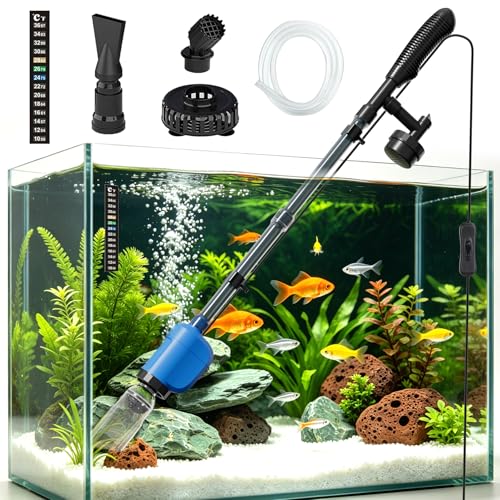
This 530 GPH device combines six functions in one and operates with a quiet 32W motor. It supports water changes, sand washing, debris removal, and water circulation, making it a practical all-in-one tool for regular maintenance. Best for busy hobbyists who want efficiency and quiet operation.
Who it’s best for: readers seeking strong suction with low noise. Why selected: high flow rate paired with 32W motor balances power and quiet operation.
Caution: larger tanks may require longer reach or multiple setups to cover corners effectively.
AQQA Electric Aquarium Gravel Cleaner

AQQA’s 6-in-1 cleaner offers water changing, sand washing, debris cleaning, tank scrubbing, water filtration, and water circulation. Powered by a 320 GPH pump, it’s suitable for mid-to-large tanks and emphasizes efficient maintenance. Best for users who want a comprehensive cleaning toolkit in one device.
Who it’s best for: aquarists needing a versatile, all-in-one solution. Why selected: six functions cover most routine maintenance tasks with a single tool. Caution: ensure the device is fully submerged and monitor for clogs in the filter cup.
Buying Guide
- Tank compatibility: Check the maximum aquarium size each cleaner supports. Some models are tailored for tanks up to 55 gallons, while others handle larger volumes with higher flow rates.
- Cleaning functions: Consider whether you need simple gravel siphoning or a multi-function device offering water changes, sand washing, filtration, and circulation.
- Flow rate: Higher GPH/L/H means faster water changes but may be too strong for delicate substrates or fry. Match the flow to your tank inhabitants and substrate.
- Adjustability: Look for adjustable tubes, flow valves, and telescopic poles to reach hard-to-clean areas and to tailor suction strength.
- Maintenance needs: Evaluate filter cups, sponge media, and ease of disassembly for cleaning and parts replacement.
- Noise and power: Electric models vary in noise; consider a model with a quiet motor if near living spaces.
- Submersion and safety: Ensure the device is designed for submersion and use in freshwater or saltwater as specified.
Frequently Asked Questions
- What is the best gravel cleaner for small tanks?
Models like the Tetra siphon are well-suited for small tanks due to simplicity and compact design.
- Do I need an electric cleaner or a manual siphon?
Manual siphons are simple and cheap; electric cleaners offer faster cleaning and are better for larger or busier setups.
- Can these cleaners be used with saltwater?
Some models are designed for both freshwater and saltwater; check the product description before use.
- How often should I clean the gravel?
Most hobbyists perform routine cleanings during regular water changes, typically every 1–2 weeks depending on tank conditions.
- Will a cleaner affect beneficial bacteria?
Minimal disruption is expected when used properly; avoid aggressive blasting of substrate to preserve biofilm.
- What is the safety consideration for long hoses?
Avoid kinks and keep hoses above the water level to prevent backflow and air pockets.