When choosing bio balls for biological filtration, focus on media that maximize beneficial bacteria growth while fitting your setup. This guide highlights five reliable options, detailing who they suit best, why they work, and potential limitations. Ideal buyers include new tank owners building biological filtration, hobbyists upgrading canister systems, and hobbyists seeking low-maintenance media. Below is a quick summary to help compare at a glance.
| Product | Best For | Key Benefit | Notable Limitation |
|---|---|---|---|
| Marineland Bio-Filter Balls (90 Count) | Canister filter users | Large surface area for beneficial bacteria | Specific to Marineland C-Series compatibility |
| Sukh Ceramic Bio Balls | Freshwater and reef setups | Inert quartz, stable parameters | Best used with appropriate mesh or chamber |
| RAINFLOW Bio Balls (100 pcs) | Bulk pond and aquarium filters | Internal cotton core increases surface area | Bulk set; sizing may vary by system |
| AQUANEAT 1.25” Large Bio Balls | Canister and pond filters | 100% polypropylene; supports gas exchange | May require bag for best flow |
| Fluval BioMax (Biological Material Remover) |
Marineland Bio-Filter Balls, 90 Count

Marineland Bio-Filter Balls provide a larger, multi-faceted surface for beneficial bacteria, supporting biological filtration in canister systems. They are compatible with Marineland C-Series filters in Rite-Size S and T adjustments. Best for hobbyists using Marineland canisters who want straightforward biological media with proven bacterial colonization. A limitation is their applicability primarily to Marineland hardware, so cross-brand compatibility should be verified before use.
Sukh Ceramic Bio Balls

Sukh Ceramic Bio Balls are inert quartz-based media designed to enhance filtration without altering water parameters. They offer a stable composition suitable for freshwater and saltwater tanks. Their open-flow, porous surface helps boost water circulation and oxygen exchange, improving long-term system stability. Limitations include the need for proper placement within a media chamber to maximize contact time and prevent channeling.
RAINFLOW Bio Balls

RAINFLOW’s 100-piece black bio balls feature an internal cotton center to increase surface area, optimizing biological filtration for both freshwater and saltwater tanks. They are designed for long-lasting use with minimal debris buildup, making them suitable for bulk filter media stores or pond systems. A potential drawback is the bulk sizing; ensure your filter compartment can accommodate the 0.7-inch diameter balls.
AQUANEAT 1.25” Large Bio Balls

AQUANEAT Bio Balls are 100% polypropylene, designed to support gas exchange and increased dissolved oxygen. They are suitable for fresh and saltwater systems, including koi ponds and can be used with canister or pond filters. The media set is delivered with a reusable mesh bag for convenient handling. A limitation is that the size and bulk may require a larger filter footprint or grouping in media compartments.
Sukh Ceramic Rings For Aquarium Filter
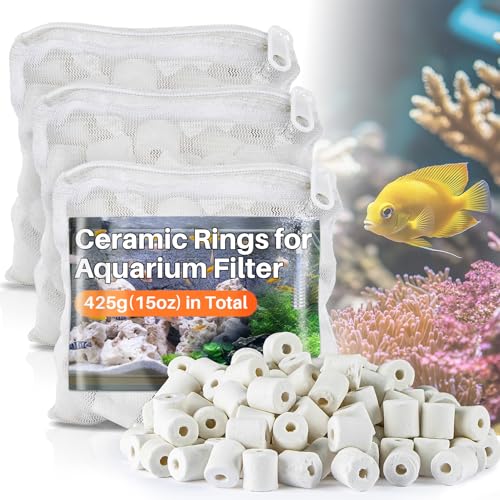
Sukh Ceramic Rings provide a porous, hollow design to reduce clogging and expand the filtration surface area. They work well in freshwater and saltwater tanks and can be used in various filter cartridges or media chambers. Best for aquariums seeking stable flow and enhanced purification; however, they are not traditional bio balls, so their use should complement other bio media within a chamber for optimal results.
AQUANEAT Bio Balls 1″ (100pcs)

These 1-inch AQUANEAT bio balls are a compact option for smaller filters or tighter canisters, designed to maximize biological filtration in constrained spaces. They pair well with a filter sponge or other media. A consideration is that smaller media may clog more easily if not adequately rinsed before use.
Buying Guide
- What tank size and filter type will you use? Larger canisters can hold more bio media, but ensure proper flow and space.
- Bio media compatibility: Some brands work best in specific filters; check manufacturer recommendations and avoid cross-brand misuse.
- Material and chemistry: Inert materials (quartz, PP) won’t alter pH; porous designs maximize bacteria colonization and filtration efficiency.
- Maintenance: Look for media that resist clogging and are easy to rinse or clean without losing beneficial bacteria.
- Combination strategy: Many setups benefit from a mix of bio balls and other media (ceramic rings, sponge, activated carbon) to balance biological and mechanical filtration.
FAQ
- What are bio balls used for in aquarium filtration?
They provide a large, porous surface for beneficial bacteria to colonize, supporting biological filtration and ammonia reduction. - Can I mix different bio media in the same filter?
Yes, many hobbyists combine media types to optimize both biological and mechanical filtration. Ensure proper flow and avoid dead zones. - Are ceramic bio balls better than plastic ones?
Ceramic media are inert and stable for long-term use, while plastic bio balls can offer higher surface area in some designs; choice depends on your filter and goals. - Do bio balls need to be replaced periodically?
They typically last a long time, but replace only if damaged or degraded. Regular rinsing helps maintain flow and efficiency. - How do I know if my bio media is functioning well?
Consistent water parameters, clear water, and stable nitrite/nitrate readings indicate effective biological filtration; avoid overstocking to prevent ammonia spikes. - Is bio ball size important?
Yes; larger media may hold more surface area but require appropriate filter space and flow; choose sizes that fit your filter’s media chambers.