If you’re searching for simple, effective aeration and biological filtration, an aquarium air sponge filter is a reliable choice for many hobbyists. These filters provide gentle water movement, mechanical and biofiltration, and are especially well-suited for breeding tanks, fry care, and nano to mid-sized setups. The top picks here target different tank sizes and livestock needs, helping you choose the right one for your setup.
| Product | Best For | Tank Size Fit |
|---|---|---|
| AQUANEAT Large Sponge Filter | Breeding tanks, fry care, nano to mid-sized tanks | Up to 60 Gal |
| DVHEY 100-120 Gal Filter | Large community tanks, shrimp and betta habitats | 100-120 Gal |
| AQUANEAT Small Sponge Filter | Small tanks, fry rearing, hatcheries | Up to 10 Gal |
| Pawfly 3 Pack Filter | Small tanks, multiple tiny tanks, breeding setups | 5-10 Gal per unit |
| Hygger 55-125 Gal Filter | Breeding and mixed livestock in mid-to-large tanks | 55-125 Gal |
AQUANEAT Aquarium Bio Sponge Filter For Large Tanks

The AQUANEAT large sponge filter combines mechanical and bio filtration with an air infusion chamber that creates minute bubbles to increase oxygen solubility. It’s best for builders seeking reliable filtration in tanks up to 60 gallons. The soft sponge minimizes risk to fry and small fish, while easy setup means you simply connect an airline and switch on the air pump. Cleaning is straightforward—rinse and squeeze in tank water to preserve beneficial bacteria.
Who it’s best for: hobbyists stocking breeding or fry tanks, nano communities, or medium-sized aquariums that need steady oxygenation without strong currents. Caution: handle the unit gently to avoid tearing the sponge, and ensure your air pump provides appropriate flow for your tank size.
DVHEY 100-120 Gal Large Aquarium Sponge Filter Kit

DVHEY’s 100-120 gallon model features dual filtration technology by combining sponge media with ceramic filter media. This setup supports powerful filtration and aeration, aided by a bubble diffuser design that produces tiny bubbles for smooth water flow and quieter operation. It’s well suited for larger fry tanks, shrimp habitats, or community tanks needing robust filtration.
Who it’s best for: aquarium keepers with larger tanks and mixed species, including shrimp and Bettas, who want strong filtration without creating disruptive currents. Limitation: larger units require adequately sized air pumps and appropriate tubing to maintain silent operation.
AQUANEAT 3 Pack Bio Sponge Filters For Small Tanks

This trio of compact sponge filters is designed for small systems up to 10 gallons each. They deliver both mechanical and biological filtration through a lightweight design and an air infusion chamber that boosts dissolved oxygen. Easy setup and cleaning make them ideal for hatcheries, fry tanks, or mixed nano setups.
Who it’s best for: hobbyists maintaining multiple tiny tanks or needing spare filters for propagation tanks. Caution: ensure you use appropriate air pump capacity for simultaneous operation of several filters to avoid over-aeration in tiny volumes.
Pawfly 3 Pack Sponge Filter For Tiny Tanks

These mini sponge filters provide mechanical and biological filtration while trapping debris without pulling out fry. Each filter measures about 2″ in diameter and fits small tanks from 5 to 10 gallons. They’re easy to detach for cleaning and rinse only with aquarium water to preserve beneficial bacteria.
Who it’s best for: those with multiple small tanks or hatcheries that need consistent, gentle filtration. Limitation: the small size means lower water turnover; pair with adequate aeration to maintain oxygenation when stocking lively species.
hygger Sponge Filter For Breeding And Shrimp Tanks

The hygger model provides precision double filtration with a circular bio cotton cartridge and a bio-ceramic ball chamber. It is designed for low-flow breeding setups such as Betta, Guppy, shrimp, and fry tanks. The air-driven operation increases dissolved oxygen, while the biochemical cotton catches fine waste particles. It can also serve as a pre-filter or auxiliary filter in larger systems.
Who it’s best for: hobbyists creating gentle-flow breeding environments or those who want a versatile pre-filter for other filtration systems. Caution: verify the air pump compatibility for your tank size to prevent excessive turbulence in sensitive tanks.
AQQA Submersible Sponge Filter For Small Tanks
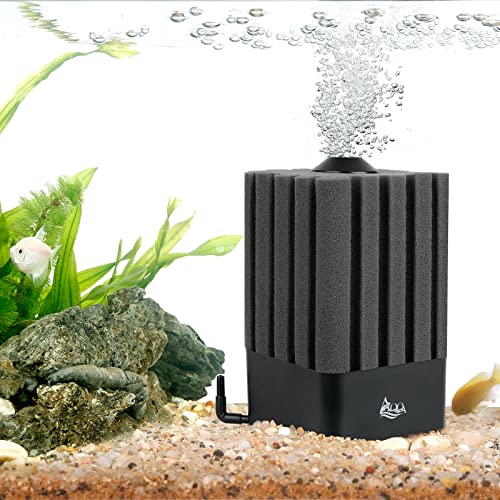
The AQQA submersible sponge filter operates with an air pump (not included) and is designed for small 5-20 gallon setups. It features replaceable sponge and bio ceramic media balls, enabling both mechanical and biological filtration. The vertical design maximizes filtration surface area, and the replaceable media supports long-term maintenance.
Who it’s best for: small tank owners who want replaceable media and a quiet, low-flow filtration option. Limitation: requires an external air pump; ensure you select a compatible pump for your tank volume to avoid over- or under-aeration.
Buying Guide: Selecting The Right Sponge Filter
- Tank size and livestock. Match the filter’s recommended tank capacity to your aquarium. Larger tanks benefit from dual-media filters, while smaller tanks often do well with compact units.
- Filtration needs. If you need both mechanical and biological filtration, ensure the unit includes sponge media plus bioceramic or ceramic media.
- Air pump compatibility. Sponge filters rely on air pumps. Confirm the pump’s flow and tubing size to achieve stable bubbles without creating strong currents.
- Maintenance ease. Choose filters that are easy to disassemble for sponge cleaning and media replacement to maintain biofilter health.
- Noise and tank placement. Bubble diffusion and air pump noise vary by model. For heavily planted or viewing tanks, quieter options are preferable.
- Special considerations. Fry and shrimp tanks benefit from gentle flow to avoid siphoning fry; look for low-current designs if needed.
Frequently Asked Questions
- Q: Do sponge filters require air pumps? A: Yes, most sponge filters operate via air-driven suction from an air pump, which moves water through the sponge.
- Q: Are sponge filters safe for fry? A: Yes, by design the sponge catches debris and reduces suction risk for small fry.
- Q: Can sponge filters handle heavily stocked tanks? A: They work best for low-to-moderate bioload; for heavy filtration needs, consider dual-media or larger external filters.
- Q: How often should I clean sponge filters? A: Rinse sponges in tank water every 2–4 weeks, avoiding tap water to protect beneficial bacteria.
- Q: Can I use sponge filters as pre-filters? A: Yes, they can serve as pre-filters in larger systems, helping to trap debris before reaching other filter media.
- Q: Do sponge filters increase oxygenation? A: The diffusion of tiny bubbles into the water improves oxygen solubility, benefiting fish and beneficial bacteria.