Answer: For hobbyists seeking automatic or semi-automatic gravel cleaning, the right aquaculture gravel vacuum cleaner makes water changes faster, reduces debris, and keeps tanks healthier. This guide highlights models suited for freshwater and mixed setups, with clear pros for beginners, experienced aquarists, and users needing versatile 6-in-1 tools. Each product section explains who benefits most, why it was selected, and a practical limitation to consider.
Summary table of selected products
| Product | Best For | Key Benefit |
|---|---|---|
| Tetra Water Cleaner Gravel Siphon | Beginner to mid-range setups | Simple siphon with up to 55-gallon compatibility |
| QZQ Aquarium Gravel Cleaner (2026) | All-in-one maintenance | Multi-function with safety design |
| UPETTOOLS 6-in-1 | Versatile hobbyists | High flow, multiple functions |
| AQQA 6-in-1 Cleaner | Efficient deep cleaning | Strong 320 GPH pump |
| Suness / hygger / Suness (various models) | Power users | High adjustable power and 3-stage filtration |
Tetra Water Cleaner Gravel Siphon for Aquariums
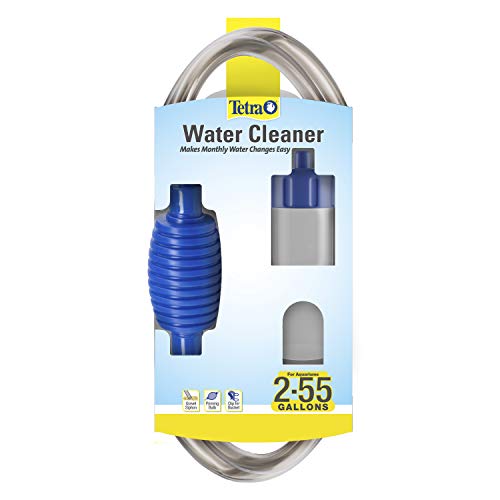
The Tetra water cleaner is a straightforward gravel siphon designed for easy freshwater maintenance. Best for beginners or casual hobbyists who want a reliable siphon to perform standard 30% monthly water changes in tanks up to 55 gallons. It promotes faster routine maintenance with minimal manual effort. A potential limitation is that it relies on gravity and manual operation, which can be less convenient for very large or heavily planted tanks where frequent resets occur.
QZQ Aquarium Gravel Cleaner (2026 Edition)
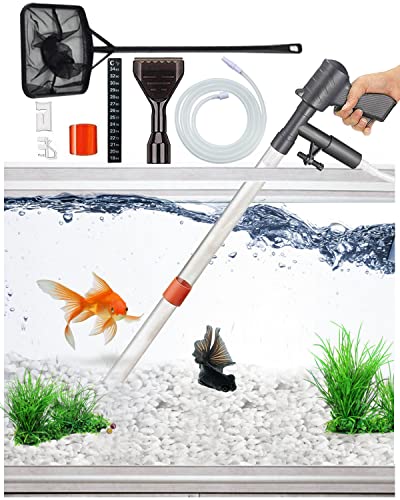
The QZQ cleaning kit is a multi-functional tool that integrates suction, sand washing, algae scraping, and water changes. Best for hobbyists who want an all-in-one solution and value a safety design that prevents fish and gravel from being sucked out. It includes a filter net to reduce blockages, but assembly and operation may require a learning curve for beginners. Not ideal for very large tanks that demand heavy-duty power in one pass.
UPETTOOLS Aquarium Gravel Cleaner

The UPETTOOLS model is a 6-in-1 electric gravel cleaner with a 28W pump and up to 1700 L/H flow. Best for intermediate and larger tanks where fast water changes and strong debris removal are needed. It supports both freshwater and saltwater use and includes a high-efficiency filtration approach. A limitation is that the device’s electric motor requires submersion as part of safe operation, so ensure proper setup and avoid dry running.
AQQA Electric Aquarium Gravel Cleaner

The AQQA 6-in-1 cleaner emphasizes efficiency with a 320 GPH pump and a three-stage filtration approach. Best for hobbyists who want rapid water changes and reliable debris removal without significant tank disturbance. The filter cup can scrub out fish waste and food residues while circulating water. A caution is that proper submersion is required for optimal performance and to avoid clogs.
Suness 36W Electric Gravel Cleaner

The Suness 36W model provides adjustable power and timed off, with a 3-stage filtration system. Best for power users who manage larger tanks or require more precise control of suction and water flow. It combines automatic water changes, gravel cleaning, filtration, sand washing, and turtle shower functionality. A potential limitation is that higher power settings may require more careful monitoring to avoid stirring up substrate too aggressively.
hygger 360GPH Electric Gravel Cleaner
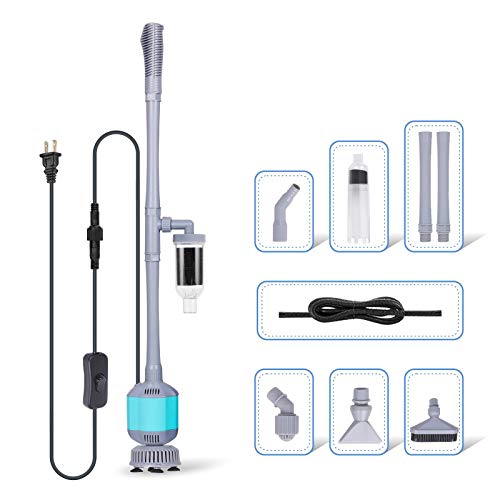
The hygger 360GPH cleaner focuses on reach and filtration, with extendable tubes and a high head that supports rapid water changes. Best for users who need flexibility to reach corners and deeper tanks while maintaining water quality. It uses a four-tiber assembly with a brush head to reach corners. A limitation is that setup may be more intricate for first-time users compared with simpler siphon-only designs.
Suness Electric Aquarium Vacuum Gravel Cleaner (24W)

The Suness 24W model delivers a balance between power and efficiency with 3-stage filtration, adjustable power, and a timed off feature. Best for mid-sized tanks requiring consistent cleaning and water changes without excessive noise. It offers eight-in-one multifunctionality, including a turtle shower option. A caveat is that lower power settings may require longer cleaning times for heavily clogged tanks.
Buying Guide: Key Purchase Considerations
What type of cleaner do I need? Choose between siphon-only, electric, or 6-in-1 cleaners based on tank size, maintenance frequency, and whether you want automatic water changes.
Tank compatibility and power. For larger tanks, look for higher flow rates (GPH) and longer reach. For small tanks, lighter power reduces substrate disturbance.
Filtration and flow control. Multi-stage filtration helps keep water clear during cleaning. Adjustable flow lets you tailor suction to substrate and fish activity.
Ease of use and safety. Manual siphons are simple but require more effort. Electric models may require setup considerations and submersion safety measures.
Durability and materials. Look for stainless or sturdy plastics, filter cups, and replaceable sponges or carbon media to extend service life.
Frequently Asked Questions
- What is the main difference between siphon cleaners and electric models? Siphon cleaners rely on gravity and manual operation, while electric models use a pump to move water, offering faster cleaning and more consistent results.
- Can these cleaners be used in saltwater tanks? Many models advertise compatibility with both freshwater and saltwater, but always verify the product specifics for salinity tolerance and corrosion resistance.
- How often should I perform water changes with a gravel cleaner? Typical practice is 20-30% every 1-2 weeks, but this depends on tank bioload and plant life.
- Do these tools remove beneficial bacteria? Proper cleaning methods minimize disruption to beneficial bacteria on the substrate, especially when using moderate suction and avoiding excessive disturbance.
- Are replacement parts available? Look for models with replaceable filter media and readily available sponges or carbon media for long-term maintenance.
- Is it better to vacuum gravel or just siphon the water? Vacuuming gravel removes accumulated debris in the substrate, supporting better water quality beyond surface water changes.