Answering the need for reliable ammonia checks, this guide highlights practical test kits for ponds and aquariums. The top picks suit different buyers—from beginner pond owners to serious hobbyists who test regularly. Each product section explains who it’s best for, why it was selected, and a clear limitation to consider. A concise buying guide follows to help compare options quickly.
Top Picks At a Glance
| Product | |||
|---|---|---|---|
| API AMMONIA 130-Test | Liquid Test Kit | Beginners and regular testers | Accurate ammonia reading from 0–8 ppm |
| AAwipes 8-in-1 Strips | Test Strips | Comprehensive quick checks | 8 parameters, includes ammonia nitrogen |
| HOVIRAN Ammonia Strips | Test Strips | Budget-friendly ammonia checks | 50 strips, simple color matching |
| A QUILA 9-in-1 Kit | Test Strips | Versatile fresh/saltwater monitoring | 9 parameters, includes ammonia |
| SJ WAVE 11-in-1 Strips | Test Strips | All-in-one home testing | 11 parameters, easy color chart |
API AMMONIA 130-Test Freshwater and Saltwater Kit
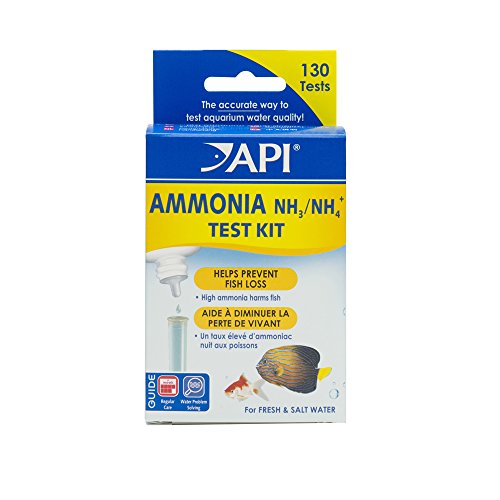
The API Ammonia 130-Test Kit provides a straightforward method to measure ammonia levels in aquarium water. It includes two testing solution bottles, two color cards, and one test tube with cap. This kit reads ammonia from 0 to 8 ppm, helping detect invisible problems that can harm fish. It is best for hobbyists who want a reliable, traditional liquid-test approach with clear color-based results. A limitation is that the kit’s single range may require additional testing if ammonia fluctuates outside the 0–8 ppm window.
AAwipes 8-in-1 Aquarium Test Kit (K02-50)

AAwipes’ 8-in-1 test strips cover seven essential chemical parameters plus ammonia nitrogen, offering a quick snapshot of tank health. The kit is suitable for both freshwater and ponds, with user guidance noting two-step dipping and a color-compare readout. Best for users who want a fast, daily check option and are monitoring multiple parameters at once. A caution is that strip-read accuracy can vary with lighting and reader interpretation, so verify colors in consistent light.
HOVIRAN Ammonia Test Strips (50 Count)

HOVIRAN offers easy-to-use ammonia test strips with 50 strips per pack. The strips measure ammonia nitrogen and deliver quick color-matching results after a short dip. This option is better for hobbyists seeking low-cost, straightforward ammonia checks for both freshwater and ponds. A limitation is that ammonia readings can be influenced by strip storage and exposure to light; keep strips sealed and stored properly to maintain accuracy.
A QUILA 9-in-1 Aquarium Test Strips

A QUILA’s 9-in-1 kit covers pH, total alkalinity, hardness, chlorine, nitrite, sulfate, copper, iron, and ammonia. It works in both freshwater and saltwater aquariums as well as ponds, making it a versatile choice for multi-environment monitoring. The strips use fiber technology and claim precise, non-bleeding color results. Choose this if you prefer a single kit that tracks ammonia alongside other crucial parameters. A potential limitation is that color interpretation can still vary with lighting and strip age.
SJ WAVE 11-in-1 Aquarium Test Strips

SJ WAVE’s 11-in-1 kit emphasizes home testing with a broad panel, including ammonia, pH, iron, copper, nitrate, nitrite, hardness, alkalinity, and temperature. This kit provides an all-in-one solution for pond and aquarium keepers who want a comprehensive snapshot without multiple purchases. Best for users who value an extensive parameter set. A caution is that more parameters can mean more potential interpretation steps; rely on the included chart for consistency.
Buying Guide: How To Choose The Right Ammonia Test Kit For Ponds
What style of test is right for you?
Liquid test kits (like API) often provide precise ammonia measurements and are less susceptible to color-interpretation errors than strips. Strips (like 8-in-1 or 9-in-1 kits) are quicker and cover multiple parameters in one reading, which helps when you monitor multiple aspects of pond health.
How many parameters do you need?
If you mainly worry about ammonia, a dedicated ammonia test kit suffices. For holistic pond maintenance, a multi-parameter strip kit saves time and offers broader insight into water chemistry, including pH, alkalinity, hardness, and nitrite.
Freshwater vs. saltwater considerations
Most kits are suitable for both freshwater and ponds, but verify that the kit explicitly supports pond water and saltwater if your setup includes marine elements. Some strips optimize color cards for freshwater results, while others aim to perform equally across environments.
Accuracy and reliability
Check the stated measurement range and the ease of result interpretation. Liquid tests with a defined ppm scale can reduce ambiguity. Strips require careful timing and consistent lighting to compare colors accurately.
Storage and shelf life
Keep test kits sealed and stored away from direct light and heat where possible. Exposure to air and sunlight can affect color stability and strip performance over time.
Best practices for pond testing
- Test water at least twice a week during active seasons or after major changes.
- Follow the kit’s specific instructions for dipping time and waiting periods.
- Record results to track trends and catch rising ammonia early.
Summary of recommendations
For precise, single-parameter monitoring, prefer liquid ammonia tests (like API 130-Test). For convenience and broader monitoring, multi-parameter strips (AAwipes, HOVIRAN, A QUILA, SJ WAVE) are effective, especially for regular checks across several water quality metrics.
FAQ
- How often should I test pond water for ammonia? Test at least twice weekly during active seasons and after large water changes or stocking changes.
- What ammonia level is safe for fish? Generally, ammonia should be near 0 ppm. Any detectable level warrants investigation and potential remediation.
- Are test strips reliable for ponds? Yes, when stored properly and read within the recommended time window; for precise measurements, liquid tests can be more dependable.
- Can I use aquarium test kits for ponds? Many are suitable for ponds, but confirm that the kit is designed for pond water or can be used in larger aquaria settings.
- Should I test for other chemicals along with ammonia? Yes. Ammonia interacts with pH, nitrite, and nitrate; monitoring multiple parameters provides a clearer picture of pond health.
- What should I do if ammonia is detectable? Check filtration, water parameters, and feeding levels. Perform partial water changes and ensure adequate biofiltration to reduce ammonia quickly.