Air stones are a simple, effective way to improve oxygen exchange, water circulation, and overall fish health in both freshwater and saltwater setups. This guide highlights top-rated air stones suitable for a range of tanks, from nano aquariums to larger systems, and covers materials, durability, and compatibility with hydroponics or live transport needs. The products below are selected for reliability, quiet operation, and consistent bubble output, helping you choose the right diffuser for your tank.
| Product | Brand | Key Benefit | Ideal For |
|---|---|---|---|
| Hygger Disc Air Stone 2×2″ | hygger | Fine bubbles, corrosion resistance | Freshwater and saltwater aquariums; hydroponics |
| Wenshall 1.6″ Air Stone | Wenshall | High-quality silicon carbide, complete kit | Small to medium tanks; easy setup |
| Uniclife 64 GPH Dual Outlets | Uniclife | Adjustable flow; quiet operation | 10–100 gallon tanks |
| Pawfly 4″ Air Stone Bar | Pawfly | Dense bubble wall for broad aeration | Buckets, ponds, DWC, large tanks |
| Hygger Mini 1″ Nano Stone | hygger | Ultra-fine bubbles with quiet performance | Nano & small tanks; hydroponics |
Below you’ll find in-depth product sections with practical details, followed by a buying guide that compares features, materials, and suitability for different aquarium setups. Each section focuses on what matters most to hobbyists: bubble size, noise level, durability, and overall compatibility with common filters and air pumps.
Hygger Air Stone for Aquarium: Disc 2×2

The Hygger Disc Air Stone uses high-density corundum sand to generate a large number of fine bubbles with low noise. The design emphasizes natural mineral materials that can release trace elements, potentially supporting water quality and fish activity—especially in ornamental or juvenile fish setups. This diffuser is versatile enough for freshwater or seawater tanks, and it can also serve hydroponic oxygenation needs.
Construction focuses on durability: a copper chrome-plated anti-rust interface ensures longevity, while a PVC base helps the stone sink automatically and stay submerged without floating. It’s suitable for a range of aquariums, from small home tanks to larger displays, and it can assist in aeration for live transports or pond sections as needed.
Compatibility tips: ensure adequate water flow around the stone to maximize bubble contact with the surface. If your tank uses a strong surface skimmer or a high-flow filter, this 2×2 inch diffuser can work well as a supplementary aeration source without overpowering delicate fry or shrimp.
Wenshall 1.6 Inch Air Stone

Wenshall’s air stone set is designed for both aquariums and hydroponics, emphasizing a complete package with four 1.6 inch stones and two T-splitters. The stones are made from silicon carbide, a material known for robustness and stable performance over time. Users benefit from easy setup and reliable oxygenation for fish and plant roots alike.
The kit’s emphasis on safety means the stones are gentle on aquatic life while maintaining a steady flow that helps prevent gas buildup in dense plantings. The included splitters simplify routing air lines to multiple stones, making it a practical option for multi-tank systems or larger tanks that require distributed aeration.
For best results, position stones away from direct water return outlets to avoid rapid bubble mixing with high-velocity currents. This helps achieve a uniform oxygen level across the tank without creating excessive turbulence in one area.
Uniclife 64 GPH Dual Outlets Air Pump
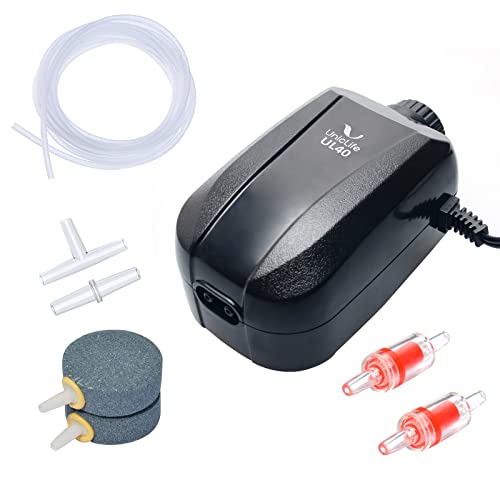
This Uniclife air pump model provides a steady 64 GPH output with dual outlets, adjustable flow, and a built-in check valve set. Suited for tanks from 10 to 100 gallons, it’s a versatile option for mid-sized aquariums. The adjustable rotary knob allows precise control over aeration, helping hobbyists tailor oxygenation to fish temperament, stocking level, or plant density.
Noise levels are a key consideration for many hobbyists, and this pump is designed to operate quietly at lower settings, with modest noise increasing as airflow ramps up. The versatility of dual outlets supports running multiple air stones or diffusers in different tank sections, which can be advantageous for larger displays or breeding setups.
Note: occasional variability in advertised flow rates can occur due to tubing length, air intake cleanliness, and backpressure from stone resistance. Regular maintenance—cleaning air lines and replacing intake filters—helps sustain performance.
Pawfly 4 Inch Air Stone Bar
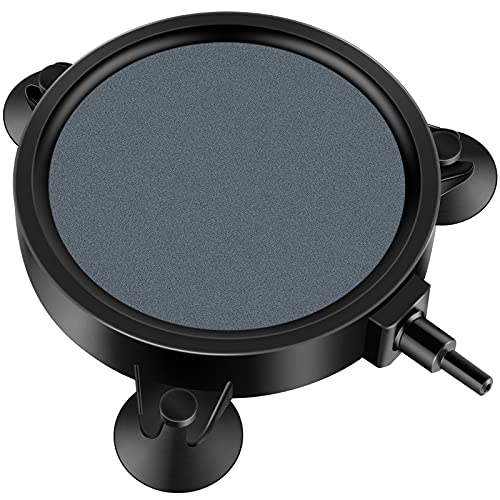
The Pawfly 4 inch air stone bar creates a dense bubble cascade that forms a rectangular bubble wall, ideal for wide water columns or integrated filtration systems. It’s designed for use in 10-60 gallon tanks, buckets, and even some pond configurations, offering a strong aeration profile for larger volumes or higher stocking rates.
Materials are described as mineral-based and sintered at high temperatures to ensure durability and safety for aquatic life. The included base helps stabilize the diffuser, making it a straightforward installation option for hobbyists who need reliable, long-lasting aeration with minimal maintenance.
For optimal performance, pair with an air pump delivering sufficient volume (as recommended) and use tubing with a compatible inner diameter. Placing the bar away from corners helps ensure even bubble distribution across the tank’s surface.
AQUANEAT 1 Inch Air Stones 12 Pack

AQUANEAT’s 12-pack of 1 inch air stones provides a compact, economical solution for small tanks or multi-station aeration. The cylinders are designed to fit common 3/16 inch airline tubing and produce a steady, medium bubble output that supports both fish health and plant growth in hydroponics or aquaponics systems.
With a balance of size and versatility, these stones are well-suited to nano tanks or as supplementary diffusers in larger setups where uniform oxygen distribution is desirable. Regular inspection and replacement of diffuser stones sustain performance and prevent clogging-related flow reductions.
Buying Guide: Key Purchase Considerations For Air Stones
- Tank size and stocking level: Larger tanks or heavily stocked systems benefit from multiple stones or longer bars to distribute bubbles evenly. For nano tanks, smaller stones with low flow are usually sufficient.
- Bubble size and aeration needs: Finer bubbles increase surface area contact and oxygen dissolution, which is beneficial for fish with higher oxygen demand or dense plantings. Coarser bubbles can aerate quickly in larger tanks but may be less efficient for oxygenation at depth.
- Material and durability: High-density ceramics, silicon carbide, and corundum-based stones tend to endure saltwater exposure and long-term use. Look for rust-resistant interfaces and a stable base to prevent floatation.
- Noise and energy use: Quiet stones and pumps are important for a living room setup. Pumps with adjustable airflow and low dB ratings reduce disruption while maintaining adequate dissolved oxygen levels.
- Compatibility with pumps and tubing: Ensure your air pump’s flow rating matches the stone’s recommended output. Check tubing inner diameter compatibility (commonly 3/16″ or 1/4″) to prevent air leaks and ensure a secure fit.
- System type: For hydroponics or live transport, choose stones that tolerate continuous operation and avoid materials that could shed particulates into the water column.
- Maintenance needs: Some stones clog less often than others; plan for periodic cleaning or replacement to maintain bubble quality and aeration performance.
Comparative Considerations
- Disc vs bar: Disc diffusers generally provide finer bubbles with broader surface contact, while bar diffusers offer higher flow and a visible bubble wall suitable for larger volumes.
- Single-use vs multi-pack: Multi-pack options are cost-effective for stocking multiple tanks or creating distributed aeration patterns in larger systems.
- Inline options: Some setups may benefit from inline diffusers paired with robust air pumps for quieter, more uniform aeration across the tank.
The right air stone choice depends on tank size, fish and plant density, and how quiet you prefer your setup to be. The selections in this guide cover a broad range of needs—from compact nano tanks to larger, multi-outlet configurations—while emphasizing durability, ease of use, and effective oxygenation.