Choosing the right air pump for a large 125-gallon aquarium involves balancing flow, noise, reliability, and the ability to run multiple stones or filters. This guide highlights five high-capacity pumps that perform well in sizable setups, delivering steady oxygenation, water movement, and backup in power outages. Each option below is chosen for strong aeration, durable construction, and suitability for large tanks.
| Product | Approximate Flow (GPH) | Key Strengths |
|---|---|---|
| AQUANEAT Aquarium Air Pump, 50W, 1110GPH | 1110 GPH | High output, aluminum housing, multiple outlets |
| AQUANEAT Aquarium Air Pump, 32W, 950GPH | 950 GPH | Strong perfomance, solid heat dissipation, multiple outlets |
| HITOP 10W 320GPH Air Pump | 320 GPH | Four outlets, flexible for multiple tanks or features |
| INCLY 7W, 245GPH Air Pump | 245 GPH | Ultra-quiet, energy efficient, four adjustable outlets |
| Hydrofarm AAPA7.8L Active Aqua | About 186 GPH (7.8 L/min) | Low power, adjustable flow, multi-outlet |
AQUANEAT 50W 1110GPH Commercial Air Pump

The AQUANEAT 50W commercial air pump delivers a high maximum airflow of 1110 gallons per hour, powered by a 50-watt electromagnetic motor. The aluminum alloy housing improves heat dissipation for longer performance in larger systems. It is suitable for running multiple air stones or filters and is recommended for placements in well-ventilated areas. This pump suits large aquariums, ponds, or hydroponic setups requiring robust aeration and reliable duty cycles.
AQUANEAT 32W 950GPH Oil-free Pump

This AQUANEAT model delivers 950 GPH with a 32-watt motor, using an aluminum casing that optimizes heat management for extended operation. It’s designed to handle multiple stones or filters and perform well in hydroponic or pond environments. Place the unit in a ventilated space to maximize longevity and stable airflow for a 125-gallon aquarium or larger setups.
HITOP 10W 320GPH Four-Outlet Air Pump
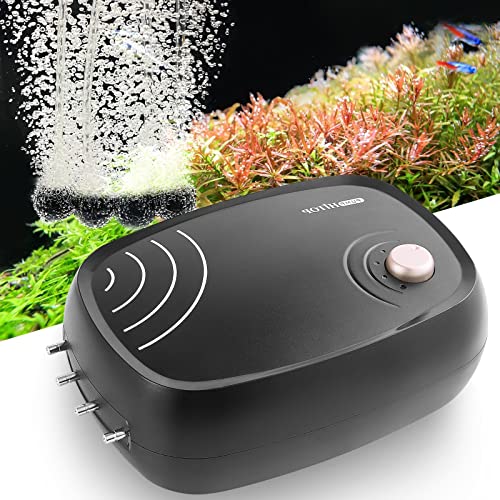
The HITOP air pump provides 320 GPH across four outlets, suitable for running multiple bubblers or a bubbler wall. It’s compact yet capable, with a knob to adjust air volume to match tank size. This makes it a versatile choice for large tanks that require diversified aeration in different zones or for supplementary oxygenation while keeping noise to a minimum.
INCLY 7W Ultra Silent Aquarium Air Pump

The INCLY pump delivers 245 GPH with ultra-quiet operation and a Hi/Low speed switch. Its energy-efficient electromagnetic motor reduces friction and noise, making it suitable for living rooms or areas where a lower-profile air pump is preferred while still delivering ample aeration for a large tank or hydroponic needs.
Hydrofarm AAPA7.8L Active Aqua
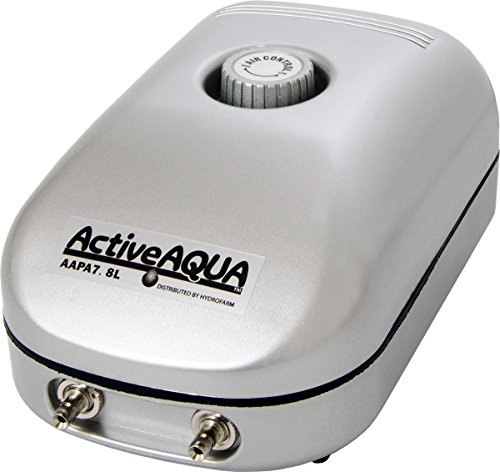
The Hydrofarm AAPA7.8L features two outlets and an energy-efficient design with a low-noise, muffled operation. It provides adjustable airflow with a compact footprint, making it a solid choice for zoned aeration in a 125-gallon system or for supplementing larger setups with predictable, adjustable air movement.
Buying Guide
- Tank size and aeration needs: For a 125-gallon aquarium, aim for total daily air exchange that supports continuous surface agitation and gas exchange. Pumps offering 900–1200 GPH total capacity are often ideal if using multiple stones or filters.
- Outlet configuration: Four-outlet designs enable zoning and simultaneous operation of several air stones or bubble walls, which helps achieve even oxygen distribution and water movement across a large volume.
- Energy efficiency and noise: Large tanks benefit from high-output pumps that still maintain quiet operation. Look for models with quiet motors, insulation, or anti-vibration features and low wattage when possible.
- Build quality and heat management: Aluminum or robust housings improve heat dissipation in high-demand pumps. This matters for reliability during long running periods in large aquariums.
- Placement and accessibility: Position pumps in well-ventilated areas away from water splashes. Check for accessible outlets and straightforward maintenance routines to minimize downtime.
- Power backup considerations: For disease-free oxygenation during outages, consider pumps with compatibility for battery backup options or easy integration with emergency power solutions.
- Maintenance and parts availability: Check for replaceable diaphragms, valves, and tubing availability. A pump with common spare parts reduces downtime and extends the system’s life.