Looking for a reliable 60 gallon aquarium heater? The right choice provides stable heat, safety features, and easy monitoring for both freshwater and saltwater tanks. This guide highlights five well-suited heaters and explains why each fits a 60-gallon setup. Ideal buyers: hobbyists upgrading from smaller heaters, reef or community tank keepers, and anyone who wants clear temperature control with built-in protections.
Summary of selected products
| Product | Best For | Key Benefit |
|---|---|---|
| Orlushy Submersible Aquarium Heater | Moderate budget, flexible sizes | Stable, energy-efficient heating with real-time thermometer |
| HiTauing Aquarium Heater (300W) | 40–75 gallon tanks | Dual protection, long cord, easy temperature control |
| hygger Aquarium Heater 300W | 40–80 gallon tanks | Digital LED controller and multiple protections |
| SEAOURA Aquarium Heater 300W | 50–60 gallon tanks | External controller and audible over-temp protection |
| AIWEK Aquarium Heater 300W | 20–60 gallon tanks | Compact, adjustable without water exposure |
Orlushy Submersible Aquarium Heater, 6 Sizes To Fit Your Tank
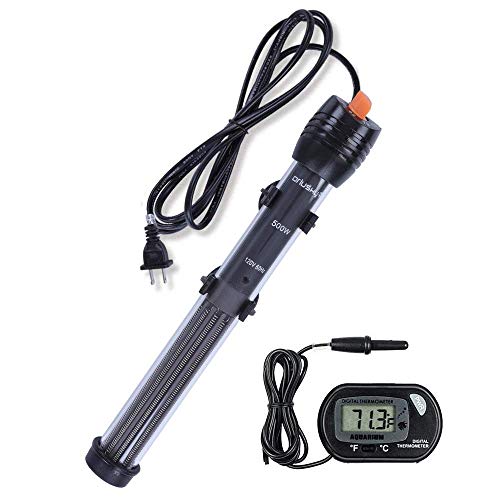
The Orlushy heater uses a stair-step heating approach with visible indicator lights: red when actively heating and green when maintaining set temperature. It ships with a separate thermometer for real-time water temperature readings. Outer ABS shell resists deformation under heat, and the nickel-chromium heating element speeds warming while remaining non-corrosive. Best for hobbyists who want an affordable, adjustable option compatible with many tank sizes, including 60 gallons. Caution: verify wattage aligns with tank volume to avoid overheating in smaller setups.
HiTauing Aquarium Heater, 300W For 40–75 Gallon Tanks
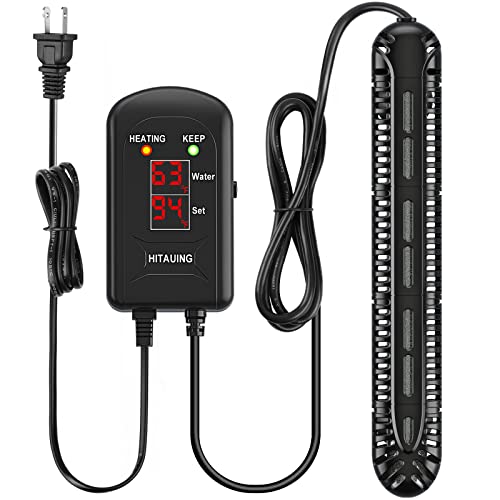
This heater provides stable heat with a 10.6-inch rod and an 8.2-foot cord. It’s designed for 40–75 gallon tanks and uses a robust ABS shell with a nickel-chromium heating element and quartz glass. It includes two intelligent protectors: over-temperature and off-water warnings. Best for users who want clear safety indicators and a longer cord for flexible placement. Limitations: larger tanks near the upper end of the range may require higher wattage for rapid heating in cooler rooms.
AIWEK Aquarium Heater, 300W For 20–60 Gallons

AIWEK’s compact 300W heater includes a temperature controller with a 7-foot cord and an external display that shows real-time and set temperatures. It automatically shuts off if water is low or the unit is removed from water. Best for smaller 60-gallon setups or where space behind the tank is limited. Better for users who prioritize simple external controls and a clear digital readout.
SEAOURA Aquarium Heater, 300W For 50–60 Gallons
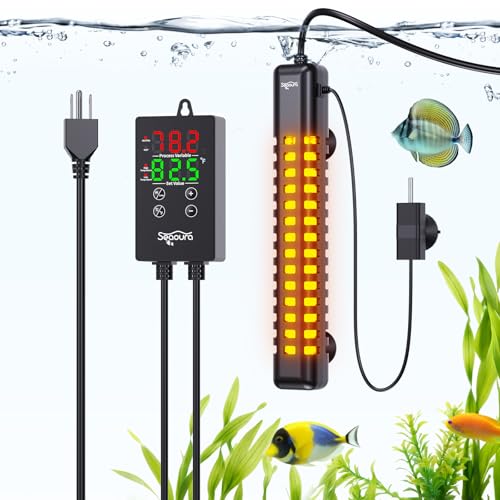
SEAOURA emphasizes a temperature probe and external controller, with over-temperature protection and an audible alert if the tank deviates from safe levels. Best for hobbyists who want audible feedback on temperature safety and precise control in a 50–60 gallon range. Caution: the audible alert may be less desirable in quiet rooms for some users.
HiTauing Aquarium Heater, 50W–500W For Large Range Tanks
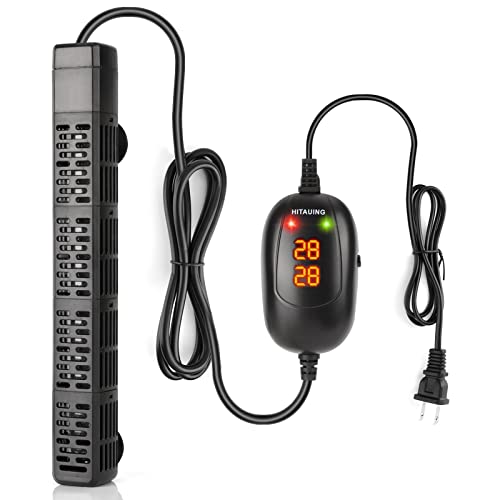
This HiTauing model covers multiple power options from 50W to 500W and includes over-temperature protection with an automatic power-off when leaving water. It suits larger tanks and scenarios requiring higher wattage. Best for users who need a scalable heater lineup or future tank expansion. Limitation: 300–500W units may be overkill for many 60-gallon setups unless the room temperature is very cool.
Buying Guide: Key Considerations For 60 Gallon Tanks
- Tank volume and heater wattage: For a 60-gallon aquarium, a 300W heater is commonly recommended as a starting point. If you have very cold ambient temperatures, consider a second heater or a higher-watt model within the safe range for larger tanks.
- Heating method and safety features: Submersible heaters with automatic shutoff when water level is low or when out of water protect fish health. Look for over-temperature protection, auto-regulation, and clear indicators (LEDs or digital displays).
- Temperature control and display: External controllers or digital readouts help maintain stable temperatures and simplify monitoring. Decide if you prefer built-in or external control options.
- Durability and materials: Quartz glass heating rods and heat-resistant ABS shells are common for durability and safety. Non-corrosive elements extend heater life in saltwater tanks.
- Ease of installation and maintenance: Long cords and accessible placement behind the tank support easier setup. Consider whether you need per-tump thermometer integration or an external separate thermometer.
- Compatibility with water type: Most 300W models handle both freshwater and saltwater. Confirm the tank’s needs (reef, community, or biotope) and choose accordingly.
- Monitoring approach: Real-time temperature monitoring reduces stress to aquatic life. External sensors and audible alarms can be beneficial in busy rooms or public setups.
Frequently Asked Questions
- What wattage is best for a 60-gallon tank? A 300W heater is typically suitable for a 60-gallon tank, though room temperature and tank inhabitants can affect needs. Consider a backup or a second heater for very cool rooms.
- Are external temperature controllers worth it? Yes, external controllers can offer precise, easy-to-read temperature settings and reduce the need to reach into the water, which can be safer for large tanks.
- Can I use two smaller heaters instead of one large one? Two heaters can offer redundancy and even heat distribution, but ensure they are properly matched and managed to avoid overheating. Always follow manufacturer recommendations.
- What safety features should I look for? Over-temperature protection, low-water shutoff, and clear indicators (LED/digital display) are essential for preventing fish stress or hazards.
- Is a submersible heater better than a hanging model? Submersible heaters are often easier to protect from fluctuations and provide even heat distribution. Hanging models can be less versatile in placement and require careful water level tolerance.
- How do I prevent overheating in a reef tank? Use a heater with tight temperature control and consider placing a second monitoring device to ensure the tank doesn’t exceed the species’ heat tolerance.