Answering the need for reliable, aquarium-friendly water filtration, a 3-stage RO system delivers clean water by removing most dissolved solids and contaminants. This guide highlights practical options for hobbyists and professionals seeking consistent, safe water for fish tanks, reefs, and fresh-water setups. Best for: aquarists who want compact, easy-to-install units with proven filtration stages and low maintenance. The table below compares the top five picks to help you choose quickly.
| Product | GPD | Best For |
|---|---|---|
| Geekpure 3 STAGE Portable Aquarium RO System | 100 | Small tanks, portable setups |
| Aquatic Life RO Buddie 3-Stage | 50 | Budget-friendly tanks and fountains |
| Geekpure 4 Stage Portable RO System | 100 | Aquariums needing additional DI stage |
| Aquatic Life RO Buddie 3-Stage Hydroponic | 75 | Hydroponics and aquatic setups |
| Aquatic Life RO Buddie 4-Stage RO/DI | 50 | Plants, fish tanks, fountains |
Geekpure 3 Stage RO System 100 GPD

The Geekpure 3 Stage RO System provides a 3-stage process that reduces total dissolved solids (TDS) and contaminants down to 0.0001 micron. It targets heavy metals, fluoride, chlorine, and other impurities, making it suitable for aquarium use and residential drinking water. Best for hobbyists who want compact, portable filtration with a 1:2 pure-to-waste water ratio and 100 GPD capacity. A 30-minute flush recommended after installing new filters helps ensure optimal performance. Caution: integrated DI resin or additional pre-filters are not included in this variant.
Aquatic Life RO Buddie 3-Stage

This 3-stage RO system focuses on producing filtered water for aquariums with up to 98% reduction of total dissolved solids. It’s best for fish tanks, humidifiers, and fountains requiring clean water quickly. The sediment filter removes particulates like sand and silt to preserve clarity, while the system’s RO membrane targets dissolved solids. Suitable for small to mid-sized tanks. Caution: may require additional stages for chloramines removal in some municipal water supplies.
Geekpure 4 Stage RO System with DI

This four-stage unit adds a deionization (DI) stage to the standard RO process, achieving TDS close to 0 ppm. It’s a strong candidate for aquarists who want ultra-pure water suitable for sensitive coral or reef setups, or for users who require near-distilled quality water. Best for those who can accommodate a DI cartridge and are willing to perform regular cartridge swaps. Limitation: data notes a need to rinse the DI resin when replacing components; monitor DI resin color indicator and cartridge replacement needs.
Aquatic Life RO Buddie 3-Stage Hydroponic

Designed for hydroponic use, this 3-stage RO system also suits aquarium water preparation where rapid, reliable filtration is beneficial. It removes the majority of TDS and chlorides, enabling predictable substrate moisture and plant health. Best for hobbyists integrating water filtration with hydroponic or fish-plant systems. Caution: not all chloramine-removal configurations are included; ensure municipal water compatibility before use.
Aquatic Life RO Buddie 4-Stage RO/DI
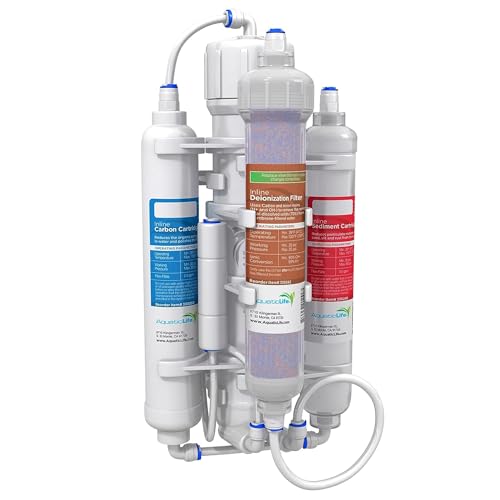
This 4-stage system includes RO and a DI stage to produce water near 0 ppm TDS. It’s well-suited for reef tanks and applications needing ultra-pure water. Best for aquarists who want maximum TDS reduction and can manage the DI resins. Limitation: the unit notes that chloramines are not fully removed by the carbon stage alone; DI can help complement chloramine treatment if needed.
4-Stage Aquarium RO with DI and Flushing
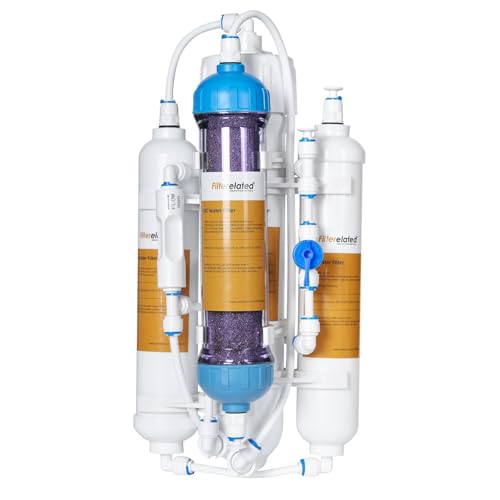
This color-changing DI filter indicates resin exhaustion, and the unit uses a flushing valve to pre-flush the membrane. With 100 GPD capacity, it’s suitable for larger tanks or higher-demand setups. Best for aquarists who want a robust, modular unit with easy maintenance, but be prepared to replace DI resin and monitor cartridge indicators. Caution: the DI resin color change requires attention to timing for resin replacement.
Buying Guide
What to consider when choosing a 3-stage RO system for aquariums
- Water needs: Match GPD to your tank size and evaporation rate. Higher GPD reduces wait time for fill-ups, but costs more upfront.
- Filtration stages: A basic 3-stage RO stops most dissolved solids; add DI or a media stage if you keep sensitive corals or require near-zero TDS.
- Membrane quality: Look for NSF/ANSI-compliant membranes and quick-connect fittings for easier maintenance and longevity.
- Waste water ratio: Typical 1:2 pure-to-waste ratios are common; consider systems with adjustable ratios if water conservation is important.
- DI compatibility: If buying a 3-stage unit, plan for a separate DI canister if you need ultra-pure water for reef tanks or sensitive species.
- Installation footprint: Portable units fit small spaces; countertop or under-sink configurations suit larger setups. Ensure cold water supply access.
- Maintenance: Verify filter replacement intervals and cartridge availability. Systems with color-changing DI resin help track resin health.
Frequently Asked Questions
- What is the main benefit of a 3-stage RO system for aquariums?
It reduces most dissolved solids and contaminants, providing stable water chemistry for fish, plants, and coral.
- Can I use a 3-stage system for reef tanks?
Yes, but reef tanks may require additional DI or a dedicated RO/DI setup to reach near-zero TDS levels.
- Do all 3-stage systems remove chlorine?
Most do, but check the presence of a carbon pre-filter; some systems may need an additional chloramine treatment stage for municipal water.
- Is 100 GPD necessary for a small tank?
Not always; for small tanks, 50–75 GPD is often sufficient. Choose higher capacity if you need rapid water changes or multiple aquariums.
- How often should I replace filters?
Replacement frequency depends on usage and water quality; follow manufacturer guidance and test water TDS to determine timing.