Answering the needs of large saltwater aquarists, this guide covers top equipment options ideal for a 250-gallon system. Each product is evaluated for reliability, suitability for big tanks, and practical setup considerations. Best for professional displays, reef tanks, or ambitious home setups that require robust filtration, reliable sterilization, and capable water management. The buyer profile: hobbyists upgrading from smaller tanks, lobbies or public display tanks, and those seeking durable gear for continuous operation.
| Product | Best For | Why It Stands Out |
|---|---|---|
| Fluval FX4 High Performance Aquarium Filter | Large, high-flow reef or fish tanks | 700 GPH capacity, smart pump, auto air evacuation, complete media; strong all-around filtration. |
| 600GPH UV Aquarium Filter for 100-300 Gal Tank (coospider-repta) | Quarantined systems and algae control for large tanks | UV sterilization helps clear green water and reduce micro-organisms. |
| Coralife Turbo-Twist UV Sterilizer | Direct UV sterilization for 250-gallon systems | Twist-flow design improves exposure to UV light for effective filtration. |
| Empire USA 150 Gallon Starfire Glass Aquarium | Main display tank for a 250-gallon system | High-clarity Starfire glass, built-in overflow box for clean filtration integration. |
| hygger Submersible Aquarium Heater 900W | Large saltwater tanks needing precise temp control | Remote temperature control, safety features, and auto-off protection for 110-250 gallons. |
Fluval FX4 High Performance Canister Filter

Best for: large reef or mixed-aquarium setups that require high turnover and robust media capacity. Why selected: The FX4 delivers a high flow rate (700 US GPH), multi-stage filtration, and smart pump technology that consistently optimizes performance. The removable, stackable media baskets reduce bypass and hold a total of 1 US gallon of filter media, including mechanical, chemical, and biological media. Caution: Larger canister systems require careful setup to avoid excessive head pressure and ensure proper priming in a saltwater environment.
600GPH UV Filter for 100-300 Gal Tank

Best for: algae control and water clarity in large tanks. Why selected: This filter is designed for 100-300 gallon systems, providing strong filtration plus UV light integration for green water issues. It supports independent control of the UV function, allowing you to run filtration without UV if desired. Limitation: UV effectiveness depends on lamp age and UV exposure time; periodic maintenance is essential for consistent results.
Coralife Turbo-Twist UV Sterilizer 6X

Best for: supplementary UV sterilization for sizable saltwater systems. Why selected: Coralife’s twist-flow design increases exposure to UV light, improving sterilization efficiency for free-floating micro-organisms. Suitable for up to 250 gallons when paired with a compatible filtration setup. Caution: Ensure proper flow rate to maximize UV exposure; too low a flow may reduce effectiveness.
Empire USA 150 Gallon Starfire Glass Aquarium
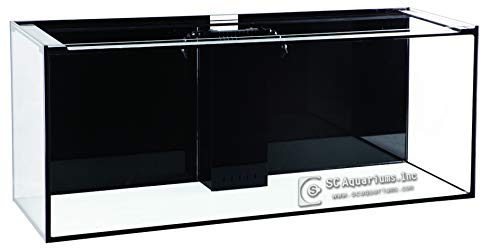
Best for: a premium display tank in a 250-gallon system. Why selected: The Starfire glass panels offer high clarity and vibrant color rendering, while the built-in overflow box supports efficient water flow and filtration integration. It’s ideal for reef or mixed tanks where visibility and aesthetics matter. Caution: Large dimensions require stable stand and plumbing planning for overflow and sump integration.
hygger 900W Submersible Aquarium Heater

Best for: large saltwater tanks needing dependable temperature control. Why selected: The 900W heater is suitable for 110-250 gallon tanks and offers external temperature control with a large LCD readout, plus safety features like low-water alarms and auto-off protection. Caution: Ensure the heater is adequately covered or shielded in a sump system to prevent accidental contact or heat variability due to ambient room temperatures.
Buying Guide: Key Considerations for a 250-Gallon Saltwater System
- Filtration capacity and flow: Match filter turnover to tank volume and stock. High-flow filters like the Fluval FX4 support robust biological filtration and mechanical media.
- UV sterilization: Consider integrated UV options to reduce algae and micro-organisms, but plan maintenance for lamp life and water exposure.
- Tank and filtration integration: A built-in overflow or well-planned sump design helps maintain stable filtration and water movement for large systems.
- Temperature control: Large volumes heat and cool differently; reliable heaters with adjustable control and alarms help maintain stable temperatures.
- Physical footprint and setup: Ensure stands, sump space, and filter footprint fit your room and cabinet configurations. Heavy equipment requires solid support and careful plumbing.
- Maintenance practicality: Look for filter media capacity and ease of media replacement, as well as accessible prime and priming features for saltwater use.
Frequently Asked Questions
- What size filter is best for a 250-gallon saltwater tank?
– A high-capacity canister filter or dual filters with substantial media capacity and a realistic turnover rate (roughly 5-10 times the tank volume per hour) is recommended. - Is UV sterilization essential for a 250-gallon system?
– It can be beneficial for control of free-floating algae and microorganisms, but it is not mandatory. It should be used in conjunction with solid filtration and proper husbandry. - Can I use any heater with a 250-gallon tank?
– Choose a heater or combo of heaters rated for the tank volume, with accurate temperature control and alarms to prevent overheating or under-heating. - What maintenance frequency is typical for large canister filters?
– Regular cleaning of mechanical media and periodic replacement of chemical and biological media, according to manufacturer guidance and tank bioload, is advised. - Do I need a separate overflow box for a 250-gallon tank?
– An overflow box helps manage water flow efficiently and supports a reliable sump filtration system, especially in larger displays. - Are all components required to be from the same brand?
– Not necessarily; many setups use compatible components from multiple brands, as long as flow rates, connections, and volumes are matched to the system’s needs.