At-a-glance, the top 5 selections below are 100 GPD reverse osmosis systems ideal for households seeking high-flow, high-quality drinking water. These options suit families, small offices, and anyone who wants efficient filtration with a 1:1 or near 1:1 waste-to-product ratio. Each entry highlights who benefits most, why it was chosen, and a practical caveat to consider before purchase.
Summary of selected products:
| Product | Best For | Why It Stands Out |
|---|---|---|
| Max Water 5 Stage 100 GPD RO-5C2 | Families needing reliable, multi-stage filtration | Five-stage filtration with food-grade components and 95–98% TDS reduction |
| Aquatic Life 4-Stage 100 GPD RO/DI | Water with chloramines and chlorine concerns | Includes Carbon Plus cartridge for chloramine/chlorine removal |
| NU Aqua 5-Stage Under Sink 100 GPD | Homes seeking strong warranties and support | High flow 100 GPD with faucet and tank; solid support |
| Express Water ROALK10MBN 10-Stage 100 GPD | Alkaline option lovers and high impurity removal | Alkaline stage adds minerals; high impurity reduction |
| iSpring RO100 Under Sink 5-Stage 100 GPD | Large households needing fast supply | US-made filters; good waste ratio and high flow |
Max Water 5 Stage 100 GPD RO System

Best for households that want a complete five-stage filtration path, including sediment, carbon, and RO membranes. The 0.0001-micron RO stage targets most dissolved solids, with a waste ratio around 1:2. The system uses food-grade components and quick-connect fittings for easier maintenance. Ideal for fresh-tasting drinking water, coffee, and ice.
Who it’s best for: families that need consistent, clean water with a strong emphasis on filtration depth. Why selected: five stages provide layered filtration, which helps reduce a broad range of contaminants. Caution: waste-to-filter ratio can be higher than some competing 1:1 designs, and it is recommended to use a booster pump for well water.
Aquatic Life 4-Stage 100 GPD RO/DI
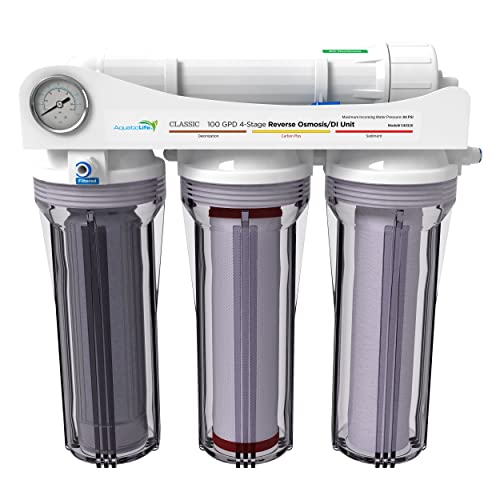
This unit integrates a Carbon Plus cartridge for strong chlorine and chloramines reduction, plus a DI cartridge for further deionization. It delivers up to 100 GPD and uses a multi-stage filtration sequence (sediment, Carbon Plus, RO membrane, and DI) to yield very low TDS water. Best for homes with chloramine or chlorine taste concerns.
Who it’s best for: households needing robust post-treatment deionization. Why selected: the Carbon Plus element enhances taste and odor improvement. Caution: DI cartridge capacity will influence running costs over time, so monitor resin changes.
NU Aqua 5-Stage Under Sink 100 GPD RO System

NU Aqua emphasizes easy installation, a 100 GPD output, and a faucet with a stainless-steel finish. The kit includes a tank and filter housings designed for straightforward upgrades. It’s a practical choice for households seeking reliable performance and a solid warranty backing.
Who it’s best for: homeowners who want a feature-rich system with clear support and a contemporary faucet. Why selected: strong flow and a comprehensive 5-stage setup. Caution: the warranty and service benefits are a selling point; ensure local water quality aligns with system assumptions to maximize performance.
Express Water ROALK10MBN 10-Stage 100 GPD

This system blends RO with an alkaline stage, adding minerals to raise pH while maintaining impurity removal. It offers a 100 GPD capacity and a compact under-sink footprint. The kit is designed for easy DIY installation and includes support resources for setup.
Who it’s best for: buyers who value mineral-rich, alkaline water and straightforward installation. Why selected: the Alkaline stage differentiates this model from standard RO systems. Caution: higher stage count means more potential maintenance intervals and filter replacement scheduling.
APEC Water RO-PH90 6-Stage 90 GPD

Although listed at 90 GPD, this model is often compared with 100 GPD systems for its robust six-stage design and US-made filters. It emphasizes high-purity water with fluoride, VOCs, lead, and other contaminants addressed. The built-in pH enhancement is a notable feature for alkaline water fans.
Who it’s best for: those who want premium filtration and pH adjustment. Why selected: long-term durability and certified purification performance. Caution: if your priority is strictly 100 GPD, this one sits just under that threshold and may require careful flow management.
Membrane Solutions 100 GPD RO Membrane

When selecting a replacement membrane, Membrane Solutions offers a 0.0001-micron barrier with high rejection rates to support extended RO system performance. This membrane is designed to fit standard housings and supports several 100 GPD configurations.
Who it’s best for: users needing reliable membrane replacements for compatible systems. Why selected: it complements many 100 GPD RO setups. Caution: always confirm membrane dimensions and compatibility with the existing housing before swapping.
Buying Guide: Key Considerations For 100 GPD RO/DI Filtration
- Water quality and contaminants: assess TDS, fluoride, chlorine, chloramines, and heavy metals to determine the necessary stage depth.
- GPD needs and usage: match system flow to daily faucet demand, including ice makers and brewing needs.
- Waste ratio vs. production: understand whether a 1:1, 1:2, or better ratio fits your water source and budget for waste water.
- Faucet and tank: choose a faucet finish and tank size that fits your sink space and daily water use.
- Filters and membrane longevity: consider US-made or certified components and typical replacement intervals.
- Installation and support: evaluate DIY installability, included hardware, and manufacturer support.
Frequently Asked Questions
- What does 100 GPD mean in RO systems?
– It indicates the system’s maximum production rate of purified water under optimal conditions, typically gallons per day. - Do I need a DI stage in a 100 GPD system?
– Not always; DI is beneficial for ultra-low TDS water, but many 100 GPD RO units perform well with RO alone. - Is an alkaline stage necessary?
– It’s optional and requires you to balance taste with mineral content. Alkaline stages add minerals and raise pH. - How often should I replace the RO membrane?
– Replacement depends on water quality and usage; typical guidance ranges from 2–3 years for residential use, but follow manufacturer recommendations. - Can I install an RO/DI system myself?
– Many systems are designed for DIY installation; read the included manual and ensure you have basic plumbing tools. - What is the best 100 GPD system for apartments?
– Systems with compact designs, easy installation, and solid filtration stages tend to perform best in limited spaces.