Choosing a silicate test kit helps prevent diatom blooms and keeps aquarium glass and substrates looking clean. This guide highlights five top options that directly check silicate levels or closely support silicate management in freshwater setups. Each product is evaluated on test limits, ease of use, and value. Read on to compare kits and find the right fit for your tank.
Summary of chosen products:
| Product | Brand | Silicate Testing? | Notes |
|---|---|---|---|
| Seachem MultiTest Silicate Test Kit, 75 Tests | Seachem | Yes | Low detection limit; multi-cavity plate for up to 6 tests simultaneously |
| Salifert Silicate Test Kit | Salifert | Yes | Fast, sensitive, accurate; dual scales |
| Sera Marin Silicate Clear 500 g | Sera | Yes (removal focus) | Permanent silicate removal and binding for marine tanks |
| API FRESHWATER MASTER TEST KIT | API | No (general test kit) | Broad parameter coverage; useful alongside silicate management |
| AAwipes 8-in-1 Aquarium Test Kit (K02-50) | AAwipes | No (test strips) | 8 parameters; quick strip-based readings for freshwater and ponds |
Seachem MultiTest Silicate Test Kit
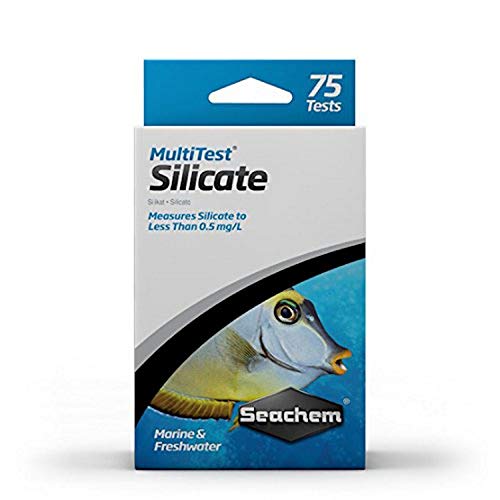
Seachem’s MultiTest Silicate Test Kit offers a detection limit down to less than 0.5 mg/L, suitable for hobbyists monitoring silicate trends in freshwater tanks. It includes a multi-cavity plate to run up to six tests at once and provides a reference for test validation. This design aims to minimize repeat testing time while maintaining accuracy, which is essential for managing diatom risks in small to medium aquariums.
Salifert Silicate Test Kit
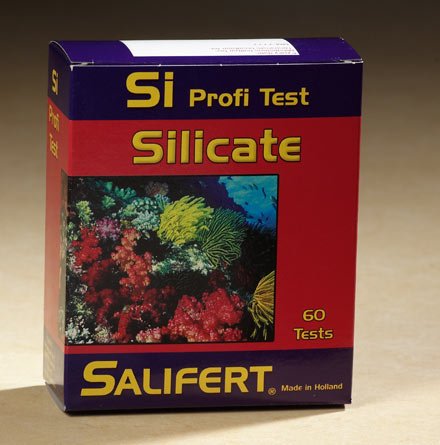
Salifert’s Silicate Test Kit is described as fast, sensitive, and accurate, with dual scales to help users interpret silicate concentrations. The kit is known for reliability in freshwater and marine setups where silicate can contribute to diatom issues or interfere with trace elements. Its streamlined testing process supports regular monitoring without excessive complexity.
API FRESHWATER MASTER TEST KIT

The API Freshwater Master Test Kit provides broad coverage of five vital parameters—pH, high-range pH, ammonia, nitrite, and nitrate—plus accompanying solutions, color card, and tubes. Although it does not target silicate directly, it remains a staple for routine water quality checks, enabling a complete view when silicate management is part of an overall tank maintenance plan.
Sera Marin Silicate Clear

Sera Marin Silicate Clear is designed for permanent silicate removal or binding in marine aquariums. While not a test kit by itself, it directly addresses silicate buildup, which can be a practical companion product for silicate control in reef or marine setups where diatoms and silicate uptake pose ongoing challenges.
AAwipes 8-in-1 Aquarium Test Kit
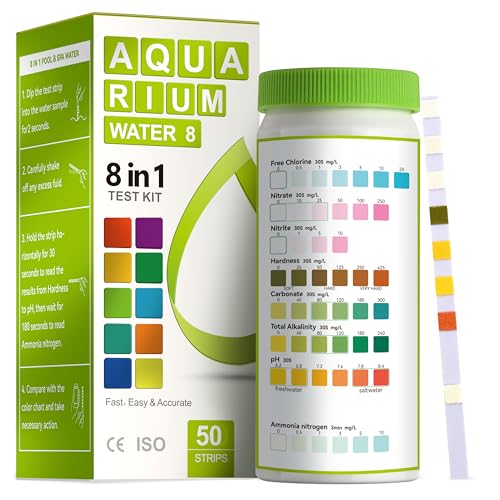
The AAwipes 8-in-1 test kit uses strips to measure multiple parameters, including pH, ammonia, alkalinity, and other key water quality indicators. While not specifically a silicate test, its broad screening capability can help identify conditions that accompany silicate-related issues, such as diatom growth, enabling a proactive maintenance approach.
Buying Guide: Silicate Test Kits And Related Management
When selecting a silicate-focused test kit, consider detection limits, test format, and how the item integrates with other water-chemistry checks. Below are practical considerations and comparisons to help you decide:
- Detection limit and accuracy: Lower detection thresholds are beneficial for early silicate changes. Seachem’s kit emphasizes a 0.5 mg/L detection level, which suits many freshwater tanks.
- Test format: Liquid-based kits (e.g., Seachem, Salifert) provide direct readings, while strip-based options (AAwipes, SJ WAVE) offer quick, broad screening but may be less precise for low silicate levels.
- Combined testing strategy: For silicate control, pair a silicate-specific kit with a comprehensive master kit (API) to monitor pH, ammonia, nitrite, and nitrate, giving a fuller water-quality picture.
- Application scope: Marine systems may benefit from silicate removal products (like Sera Marin Silicate Clear) in addition to testing, since silicate dynamics differ between freshwater and saltwater environments.
- Ease of use and throughput: Multi-test formats and plates save time when testing multiple samples or frequent checks. Consider whether you need quick results or highly precise measurements.
- Maintenance compatibility: If you use RO/DI water or have known silicate sources, choose kits that align with your water source and filtration regime to detect any changes promptly.
- Cost and supply: Reagent availability and total test counts (e.g., 75 tests in Seachem) affect ongoing costs. Balance upfront price with anticipated testing frequency.
In practice, a focused silicate test (Seachem or Salifert) paired with a broad master kit (API) provides a balanced approach for many hobbyists. For marine setups with persistent silicate challenges, adding a silicate-removal strategy (Sera) can complement testing efforts and support long-term clarity.