Finding a reliable digital fish tank heater is essential for maintaining stable water temperatures in both freshwater and saltwater setups. The right model combines precise temperature control, safety protections, and durable construction to protect aquatic life. Here, five top picks with digital displays and robust safety features help you regulate heat efficiently across a range of tank sizes. The selections emphasize easy monitoring, automatic shutoffs, and clear temperature readouts to support healthy, stable environments for your fish and other aquatic pets.
Summary of Selected Products
| Product | Brand | Wattage | Tank Range | Key Digital Feature |
|---|---|---|---|---|
| HiTauing 300W Digital Display | HiTauing | 300W | 40–75 gallons | LED digital display with safety protections |
| hygger Digital Controller 300W/500W/800W/1000W | hygger | 300–1000W | 40–80 gallons (varies by wattage) | Digital LED controller, auto shutoff |
| Orlushy 300W Digital Display | Orlushy | 300W | 40–60 gallons | External digital controller, auto protection |
| HiTauing 50W–300W Series | HiTauing | 50–300W | 40–75 gallons | Intelligent water sensor, temperature range display |
| HiTauing 200W Digital Display | HiTauing | 200W | 20–40 gallons | LED display, 5 safety protections |
HiTauing 300W Digital Display Aquarium Heater
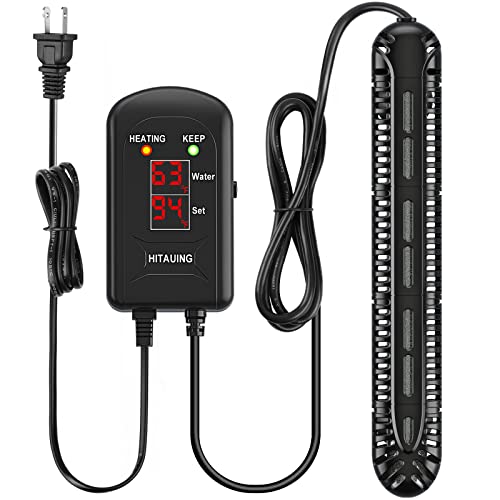
The HiTauing 300W digital heater is designed for 40–75 gallon tanks. It uses a stable 300W heating element and a clear LED display to show current water temperature and set point. The unit is housed in a durable ABS shell with explosion-proof quartz glass and nickel-chromium heating wire for safety and longevity. It includes two intelligent protectors that stop heating if water levels are too high or temperatures exceed 94°F, helping prevent overheating and equipment damage. The included suction cups simplify installation and positioning in larger tanks.
hygger 300W/500W/800W/1000W Digital LED Controller Heater

The hygger family offers a range of wattages with a digital LED controller, suitable for 40–80 gallon tanks (depending on wattage). It features an automatic shutoff when water temperature exceeds 94°F or the water level drops, indicated by error codes. The LED display provides real-time temperature and preset readings, and a bracket allows mounting on the tank edge for easy adjustment. This model emphasizes multiple protection features to prevent overheating and dry-running, making it a strong option for precise control across larger tanks.
Orlushy 300W Submersible Digital Display Heater

Orlushy’s 300W unit is designed for 40–60 gallon tanks, combining a compact 8.6-inch heater body with a quartz glass tube to minimize space while maximizing durability. It uses a digital display and external controller to set temperatures, and includes rapid heating with precise temperature sensing to reduce fluctuations. The heater includes automatic shutoff if water levels are low or if water becomes overheated, helping to protect both fish and equipment in freshwater or saltwater setups.
HiTauing 300W Upgraded Digital Aquarium Heater

The upgraded HiTauing 300W heater uses explosion-proof quartz glass with a robust ABS shell to guard against leaks and scalds. It features a rapid heating system and a sensitive temperature control probe that automatically stops heating when the head is out of the water or when the set temperature is reached. The device supports a wide 63–94°F (17–34°C) range and uses a long power cord for flexible installation in larger or hard-to-reach tanks. It prioritizes user-friendly digital readouts for monitoring.
HiTauing 50W/100W/200W/300W Series With Digital Display
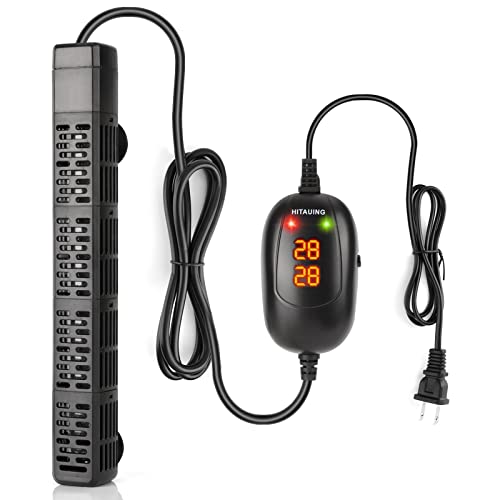
This line offers 50–300W options with a digital display and smart temperature control. It includes two protection mechanisms: leaving-water detection and over-temperature protection. The temperature range covers common freshwater and saltwater setups, and the controller enables easy adjustment. With a longer cord on some variants, installation flexibility is improved for larger or uniquely arranged tanks. The safety features reduce risk for both aquatic life and hobbyists.
Buying Guide For Digital Fish Tank Heaters
- Tank size and wattage: Match heater wattage to your tank volume. A common rule is 3–5 watts per gallon for tropical fish, but check manufacturer guidance for your species and environment. Digital models often offer a range so you can select the closest wattage before installation.
- Temperature range and precision: Look for a wide, accurate temperature range (e.g., 59–93°F or 17–34°C) and a display that shows real-time temperature. Narrow ranges may suffice for some setups but can limit flexibility as seasons change.
- Safety protections: Prioritize models with automatic shutoff for out-of-water situations, overheat protection, and explosion-proof or reinforced glass. A robust ABS shell adds handling safety and longevity.
- Sensor placement and response: External controllers or submersible sensors should provide quick, stable readings. A sensor that distinguishes out-of-water quickly helps protect aquatic life from rapid temperature shifts.
- Installation and visibility: Consider models with clear digital displays, long cords, and easy mounting options (suction cups, brackets) to minimize disturbance to the tank.
- Saltwater compatibility: If you keep reef or marine tanks, ensure the heater components are corrosion-resistant and rated for saltwater use.
- Maintenance and durability: Quartz glass and high-quality heating elements reduce wear. Look for models with corrosion-resistant finishes and warranties to ensure long-term performance.
- Redundancy and monitoring: For critical displays, some hobbyists add a second thermometer in the tank to verify readings and guard against device drift.
These digital heaters provide reliable monitoring and automated safety features across varied tank sizes. When selecting, prioritize compatibility with your tank’s volume, the stability of the temperature, and the presence of automatic shutoffs to protect both fish and heater components. The chosen models above emphasize digital readability, protection against dry-running, and quick response to temperature changes, aiding in maintaining a healthy aquatic environment.