Maintaining safe copper levels in aquarium water is essential for fish health and the effectiveness of medicines. Copper can be toxic at relatively low concentrations, so accurate testing is critical for both fresh and saltwater setups. This guide highlights reliable copper test kits and related 9-in-1 options, helping you monitor copper alongside other key water parameters. The selections below emphasize accuracy, ease of use, and value for ongoing monitoring.
| Product | Brand | Copper Testing | Notes |
|---|---|---|---|
| API Copper Test Kit 90-Test | API | Yes | Reliable copper range 0-4 ppm; includes testing solution, color card, and test tube |
| Salifert COPT Copper Test Kit | Salifert | Yes | Sensitive, accurate dissolved copper testing; suitable for marine and freshwater |
| Seachem MultiTest Copper Test Kit | Seachem | Yes | 75 tests; indicator designed for quick interpretation |
| BACNUNN 9-in-1 Test Strips (Copper included) | BACNUNN | Yes | Comprehensive 9-in-1 strips with copper; high strip count for long use |
| Aquarium Water Test Kit 9-in-1 (Copper included) | A QUILA | Yes | Versatile strips cover multiple parameters including copper |
Note: Each product has its own testing method—liquid reagent tests and/or test strips. When choosing a copper test option, consider your tank type (freshwater vs. saltwater), the typical copper sources in your setup, and the frequency of testing you plan to perform.
API Copper Test Kit 90-Test Aquarium Water Test Kit

The API Copper Test Kit provides a straightforward method to monitor copper levels in 0-4 ppm increments. It includes one bottle of testing solution, one color card, and one test tube with cap for convenient, at-home testing. This kit is designed to help detect copper-related water problems that could be harmful to fish or interfere with treatments, supporting routine quality control for hobbyists and professionals alike.
Salifert COPT Copper Test Kit

Salifert’s COPT Copper Test Kit is renowned for sensitivity and accuracy in measuring dissolved or weakly chelated copper. It performs well across a pH range of 7.5–9 and can be used for marine, freshwater, and garden pond applications. The kit is designed to last through multiple copper cures or provide up to 50 tests for routine checks, making it versatile for ongoing aquarium maintenance.
Seachem MultiTest Copper Test Kit
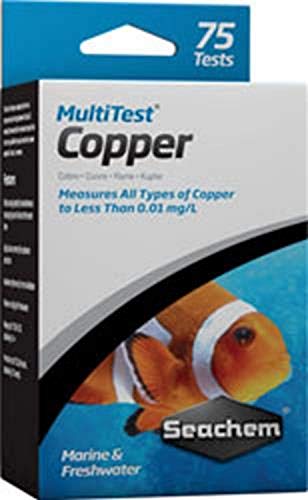
Seachem’s MultiTest Copper Test Kit offers 75 tests suitable for both fresh and saltwater environments. It features a unique indicator to simplify interpretation, helping hobbyists quickly determine copper levels and adjust as needed. The kit is structured for regular water quality checks across a range of aquarium setups.
BACNUNN Aquarium Test Strips: 200CT 9-in-1 Copper Included

BACNUNN offers a 200-count 9-in-1 test strip kit that includes copper among other essential parameters. The strips are backed by ISO certifications and long-standing lab refinement, designed for cost-effective and quick checks. This option suits hobbyists who prefer dip-strips for rapid assessments without reagents.
A QUILA Aquarium Test Strips 9-in-1

A QUILA’s 9-in-1 strips measure copper along with other critical parameters in freshwater and saltwater systems. The kit emphasizes compatibility with various aquarium setups, providing color-chart-based readings for quick, at-a-glance results and ongoing monitoring of copper and other water quality metrics.
All Seas Marine Salifert COPT Copper Test Kit
All Seas Marine’s copper test offering mirrors Salifert’s accuracy, focusing on precision in measuring dissolved copper. It is suitable for marine environments and can function as a routine copper check within mixed aquatic setups. The kit emphasizes reliability and compatibility with standard aquarium testing practices.
Buying Guide: Copper Testing In Aquariums
- Test method: Liquid reagent tests tend to be highly accurate for copper concentration, while test strips offer speed and convenience for frequent checks.
- Tank type: Saltwater systems may require more sensitive detection due to copper’s toxicity to invertebrates; freshwater tanks can tolerate slightly different ranges depending on the species present.
- Frequency: For tanks undergoing copper treatments or with metal-based decorations, more frequent testing (weekly) is recommended, while stable systems can be checked biweekly or monthly.
- Range and sensitivity: Ensure the kit’s range covers the expected copper levels in your setup. Some kits are designed for 0–4 ppm, others may offer broader or narrower ranges.
- Compatibility: If you use chelated copper or copper-based medications, verify that the test kit accurately detects copper under those chemical conditions.
- Extra parameters: Many 9-in-1 strips test for ammonia, pH, nitrate, nitrite, chlorine, hardness, alkalinity, copper, and other elements. Consider whether you want copper included with broader water-quality monitoring.
- Cost and availability: Reagent-based kits require ongoing purchases of reagents, while strips tend to be cost-effective for long-term use but may require careful color interpretation.
- Ease of use and interpretation: Look for clear color charts or digital reader options if you value straightforward results without guesswork.
- Maintenance and storage: Store reagents in a cool, dry place and follow the manufacturer’s instructions for shelf life to maintain accuracy.
- Brand reputation: Choose products from established brands with positive reliability records to minimize false readings and ensure compatibility with your aquarium species.