This guide highlights five top-rated RO/DI filtration units suited for freshwater and reef aquariums. Each system delivers reliable removal of chlorine, chloramines, heavy metals, and other dissolved solids to maintain optimal water quality. Below, you’ll find concise product summaries, image references, and practical buying considerations to help you compare options and choose the right setup for your tank.
| Product | Brand | GPD | Note |
|---|---|---|---|
| Aquatic Life Twist-In 4-Stage RO/DI | Aquatic Life | 75 | Compact 4-stage unit for tanks up to moderate sizes |
| Aquatic Life RO Buddie 4-Stage RO/DI | Aquatic Life | 50 | Budget-friendly 4-stage option |
| iSpring RCC1DP Tankless RO/DI | iSpring | 150 | Tankless design with pump-assisted filtration |
| Bulk Reef Supply 4 Stage Value Plus 75 GPD | Bulk Reef Supply | 75 | All-in-one kit with monitoring features |
| Aquatic Life 4-Stage RO/DI 100 GPD | Aquatic Life | 100 | Higher capacity for larger or busy setups |
Aquatic Life Twist-In 4-Stage RO/DI System
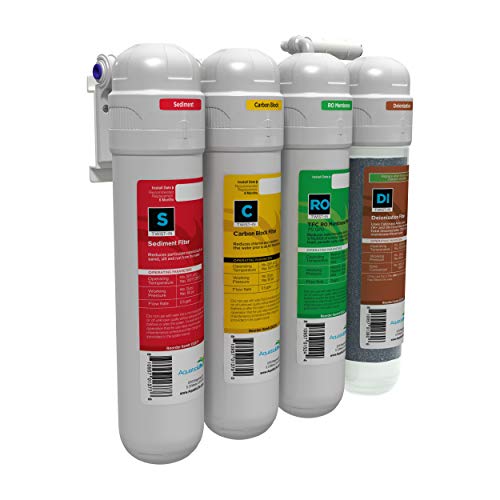
The Aquatic Life Twist-In Unit is a 4-stage RO/DI filtration system delivering up to 75 gallons per day. It focuses on membrane filtration to reduce Total Dissolved Solids (TDS) and includes features that support effective sediment removal. This setup is designed to produce clean water suitable for reef and freshwater aquariums, helping to maintain water clarity and stability. Installation is straightforward for hobbyists seeking dependable filtration without a large footprint.
Aquatic Life RO Buddie 4-Stage RO/DI

The RO Buddie is a compact 4-stage filtration unit producing up to 50 gallons per day. Its RO membrane reduces TDS effectively, and a sediment stage aids in removing particulates that can discolor water. This model is well-suited for smaller tanks or supplemental water changes where space and cost are considerations, while still delivering consistent water quality improvements for aquarium maintenance.
iSpring RCC1DP Tankless RO/DI System

The RCC1DP Tankless RO/DI System combines a 5-stage filtration with a pump-enhanced design and a high-capacity 150 GPD membrane. It can address over 1,000 water pollutants, including lead and chlorine, with a strong emphasis on maintaining steady flow in low-pressure setups. The tankless design saves space and simplifies installation, making it a compelling choice for serious hobbyists and professional environments requiring high throughput and reliable instrumentation.
Bulk Reef Supply 4 Stage Value Plus 75 GPD

This 4-stage system provides up to 75 GPD with a complete kit of installation accessories. It includes a built-in TDS monitor, a pressure gauge, and a canister wrench for filter changes. The design emphasizes practical measurement and maintenance, helping users track water quality and optimize RO/DI performance for reef or freshwater setups that require consistent output and easy upkeep.
Aquatic Life 4-Stage 100 GPD RO/DI
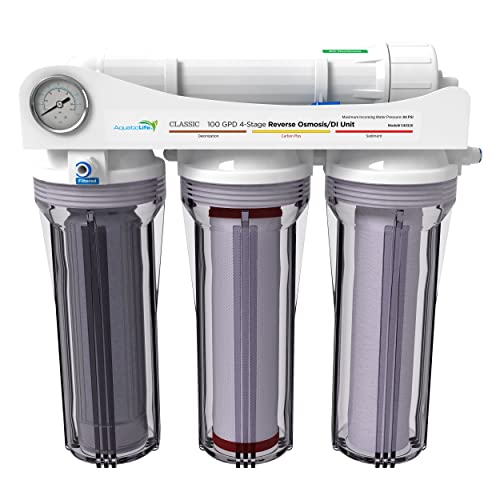
The 100 GPD model from Aquatic Life uses a four-stage filtration to deliver higher daily output and robust contaminant removal. A carbon-plus cartridge targets chloramines and chlorine, while the RO membrane reduces TDS for reliable preparation of aquarium water. This option is suitable for larger tanks or more frequent water changes where faster processing is advantageous.
Buying Guide
When selecting an aquarium RO/DI system, consider these factors to ensure you pick a setup that matches your tank size, maintenance preferences, and water quality goals.
- Daily production rate (GPD): Larger tanks or reef setups benefit from higher GPD (e.g., 100–150 GPD) to reduce wait times for water changes and ensure enough purified water is available.
- Filtration stages: A 4-stage system is common and balanced for most hobbyists. Some higher-end models add DI polishing and advanced monitoring for more precise control of water quality.
- TSI reduction and membrane quality: Look for membranes that minimize total dissolved solids and carbon cartridges that reduce chlorine/chloramines and organics, protecting sensitive livestock and coral.
- Tankless vs. tanked design: Tankless units save space and simplify installation but require careful flow management and fittings. Tanked systems can be easier to maintain if you prefer a familiar reservoir setup.
- Ease of installation and maintenance: Ensure the kit includes necessary fittings, adapters, and a wrench, plus straightforward replacement filters. Built-in TDS meters and pressure gauges help schedule changes.
- Size, footprint, and aesthetics: Consider the space available under the sink or in a cabinet. Some compact units are ideal for small setups, while others cater to heavy-use environments.
- Brand support and replacement parts: Reputable brands with readily available replacement cartridges simplify long-term ownership and ensure consistent performance.
- Calibrating for reef versus freshwater: Reef systems often require higher-quality carbon and accurate DI resin management to remove chloramines and trace contaminants that impact coral health.
In practice, select a system that aligns with your tank’s needs: higher GPD for busy reef tanks, reliable DI polishing for ultra-pure water, and convenient monitoring for ongoing maintenance. While prices vary, focusing on filtration efficacy, ease of use, and support will yield better long-term results for aquatic ecosystems.