CO2 supplementation is essential for thriving planted aquariums. This guide highlights five reliable products that help maintain consistent carbon levels, promote faster growth, and support healthier plant life. Best for beginners, hobbyists expanding growth, and serious aquarists seeking precise monitoring or DIY setups. The table below summarizes who each product suits and why it’s recommended.
| Product | Best For | Why It Stands Out |
|---|---|---|
| API Co2 Booster Freshwater Aquarium Plant Treatment 8 Fl oz | Simple, ready-to-use supplementation | Adds essential carbon in a form plants can absorb directly from the water. |
| Seachem Flourish Excel 500 ml | Organic carbon source with iron considerations | Provides bioavailable carbon and supports iron reduction for plant uptake. |
| Pawfly Glass CO2 Drop Checker Kit | Visual CO2 monitoring | Easy, color-change indicator to gauge CO2 balance at a glance. |
| 120 PCS CO2 Tablet by Brrnoo | Low-maintenance CO2 delivery | Tablets release CO2 over time, boosting photosynthesis in planted tanks. |
| Fzone 2.5 L Aquarium CO2 Generator Kit | DIY CO2 generation for larger setups | Complete system with regulator and needle valve for precise control. |
API Co2 Booster Freshwater Aquarium Plant Treatment 8 Fl oz Bottle
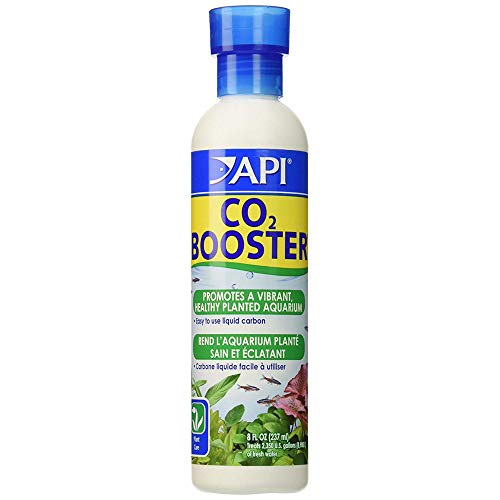
What it is: A ready-to-use CO2 supplement designed to promote plant growth in freshwater aquariums by adding carbon that plants can absorb from water. Target buyer: beginners and hobbyists seeking a straightforward dosing routine. How it helps: Provides a quick carbon boost without complex setup. Selected because of its simplicity and direct carbon delivery. Caution: Do not rely on it as the sole carbon source in high-demand setups; monitor plant response and tank chemistry.
Seachem Flourish Excel 500 ml

What it is: An organic carbon source for planted aquariums, designed to supply bioavailable carbon and support photosynthesis. Target buyer: aquarists who prefer a liquid carbon option and want an additional iron-related benefit. How it helps: Delivers carbon directly to plants and can complement CO2 injections. Selected because it combines carbon provisioning with iron-reducing properties to aid plant uptake. Caution: Not a substitute for robust CO2 injection in high-demand, densely planted tanks.
Pawfly Glass CO2 Drop Checker Kit

What it is: A complete CO2 monitoring kit to track CO2 levels, including curved tubing, reagent solution, and suction cups. Target buyer: meticulous hobbyists and those seeking precise CO2 balance visibility. How it helps: Colors indicate CO2 balance at a glance, reducing guesswork. Selected for its ease of use and clear visual feedback. Caution: Requires proper tubing orientation; incorrect placement can affect accuracy.
120 PCS CO2 Tablet by Brrnoo

What it is: Carbon Dioxide diffuser tablets designed to slowly release CO2 into the aquarium water to support plant growth. Target buyer: budget-conscious aquarists seeking a simple, low-maintenance dosing method. How it helps: Promotes photosynthesis by increasing dissolved CO2 over time. Selected because tablets offer a steady, gradual CO2 source with minimal equipment. Caution: Dissolution rate can vary with tank volume and water flow; adjust quantity accordingly.
Fzone 2.5 L Aquarium CO2 Generator Kit

What it is: A professional DIY CO2 kit including a stainless steel bottle, regulator, needle valve, and bubble counter for precise control. Target buyer: tanks that require longer-lasting CO2 with adjustable delivery. How it helps: Enables steady CO2 injection and accurate tuning, suitable for experienced hobbyists or larger tanks. Caution: Requires proper assembly and safety measures; setup complexity is higher than liquid carbon products.
Buying Guide: Key Considerations For CO2 In Planted Aquariums
What size tank do you have? CO2 needs scale with tank volume. Smaller tanks often do well with ready-to-use liquids or tablets, while larger or heavily planted tanks benefit from a regulated diffuser or DIY generator system.
Do you prefer monitoring versus guesswork? Drop checkers provide visual feedback, whereas direct dosing products require water testing and careful dosing. Some aquarists pair both for balance.
What is your level of maintenance willingness? Ready-to-use liquids and tablets are low maintenance, while DIY systems demand more setup time but offer long-term control and cost savings.
What is your target growth level? Moderate growth can be achieved with simple carbon sources, but vibrant, fast-growing plant communities often need a dedicated CO2 injector with precise control.
Tank inhabitants and lighting also matter. High light and densely populated tanks escalate carbon demand; ensure CO2 supply matches photosynthetic needs to prevent algae blooms or plant stress.
Frequently Asked Questions
- What is the most beginner-friendly CO2 option for an aquarium?
- Do CO2 tablets work in all tanks?
- Is a CO2 drop checker necessary?
- Can I combine CO2 sources?
- What are potential drawbacks of DIY CO2 systems?
- How do I choose between a regulator-based system and liquid carbon?
Ready-to-use liquid carbon products and CO2 drop checkers are typically easiest for beginners, providing straightforward dosing and quick feedback.
Tablets work well in many smaller or low-flow tanks, but their release rate can vary with water movement and tank size. They are best for slow, steady CO2 delivery in suitable setups.
Not strictly necessary, but it helps monitor CO2 balance and reduces guesswork, especially for users who rely on manual dosing or DIY systems.
Yes. Some aquarists combine a liquid carbon source with a drop checker for monitoring, or pair CO2 tablets with an automated drop-checker-guided dosing approach.
DIY systems can be more complex to set up and maintain, require careful safety considerations, and may necessitate more frequent tuning to keep CO2 levels stable.
Regulator-based systems offer precise control for larger or high-demand tanks, while liquids are simpler and adequate for smaller or moderate setups.