Finding the right heater for a 10-gallon tank is essential for stable, healthy fish and plants. This guide highlights five compact, reliable options that fit the size and keep water steady for both freshwater and marine setups. Each product is evaluated for suitability, safety features, and practical caveats to help you choose.
Quick comparison table of selected products:
- Hygger Small Aquarium Betta Heater (10W) — ideal for small, mixed-aquarium setups and flexible wattage choices for hobbyists working with 1–5 gallons (paired here for context).
- HITOP 50W Adjustable Aquarium Heater — good for 6–15 gallon tanks; robust 2mm thick glass; straightforward, adjustable control.
- AQUANEAT 50W Adjustable Heater — designed for 5–15 gallon tanks; simple dial adjustment and steady temp.
- Tetra 100-Watt Submersible Heater — suited for 10–30 gallon tanks; electronic thermostat with indicator lights.
- DaToo 50W Adjustable Heater — reliable electronic control, 63°F–89°F range; compact for smaller to mid-sized setups.
Hygger Small Aquarium Betta Heater

Features include: 10W heater with a temperature range of 59-93°F, suitable for small glass or acrylic tanks up to 5 gallons, and options up to 5/10/16/26 gallon versions. The unit uses premium quartz glass and offers dry-run and overheating protection with error codes for safe operation. It is designed to resist corrosion and punch damage, making it a practical pick for compact setups. Best for tiny tanks or multibox betta enclosures where space is at a premium.
Who it’s best for: hobbyists who keep small tanks or betta-specific setups where precise, low-wattage heating is sufficient. Why selected: compact size, reliable safety protections, and a clear display make it a strong fit for small, simple systems.
Cautions or limitations: the 10W model is not intended for large 10-gallon tanks; ensure wattage selection matches tank size per the brand’s size chart to avoid underheating. Overheating protection helps prevent unsafe conditions, but monitor room temperature and water changes to maintain stability.
HITOP 50W Adjustable Aquarium Heater
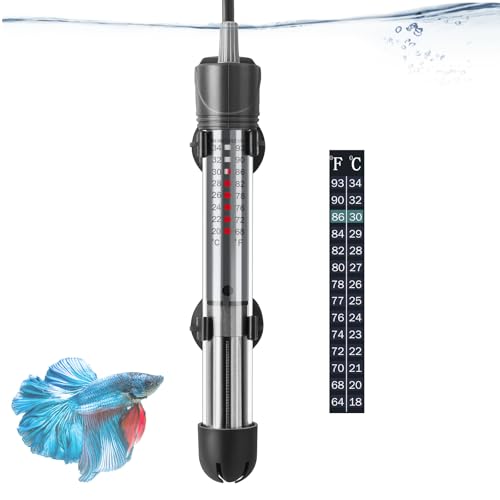
Features include a 50W heating element in a 7-inch form factor with 2mm thick quartz glass. It caters to 6–15 gallon tanks and offers an adjustable temperature range from 68 to 93°F. The heater auto-activates or deactivates with water temperature changes, reducing ongoing adjustments. It ships with a robust safety profile thanks to its thicker glass and automatic cutoffs.
Who it’s best for: mid-sized tanks close to 10 gallons where a single, straightforward heater is preferred. Why selected: reliable power for common 10-gallon aquariums, plus safety-focused design improves reliability during temperature shifts.
Cautions or limitations: designed for slightly larger mid-sized tanks; choose this if your 10-gallon tank has typical stocking and you want a single heater that covers the range efficiently. If space is very tight, verify the 7-inch length fits your hood or canopy.
AQUANEAT 50W Adjustable Heater

This 50W heater is recommended for 5 to 15 gallon tanks, with a length of 6.75 inches and a 3.6-foot power cord. Temperature is adjustable from 65°F to 89°F, and a red indicator light signals target temperature achievement while the device maintains a steady state. It supports marine and freshwater environments with a focus on stability and easy monitoring.
Who it’s best for: hobbyists seeking a simple dial-controlled heater with visible status indicators for 10-gallon setups. Why selected: straightforward operation and a reliable, mid-range wattage that aligns with standard 10-gallon needs.
Cautions or limitations: ensure the 50W rating aligns with your tank’s fill level and decor. For heavily stocked tanks or unusually cool rooms, you may need slightly higher wattage or supplemental heating.
Tetra 100-Watt Submersible Heater
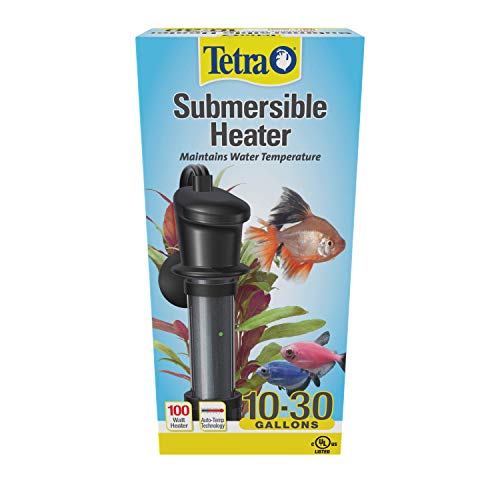
Key features include a 100-watt submersible heater designed for 10–30 gallon tanks, with an automatic thermostat to maintain around 78 degrees. An indicator light shows when heating and when the heater is on standby. This model emphasizes consistent performance over larger tanks and is a good to excellent choice when you want a single heater to cover a broader range within the 10-gallon category.
Who it’s best for: aquarists with 10-gallon tanks looking for a robust heater that can scale to modestly larger volumes. Why selected: balanced wattage and clear operation indicators enhance reliability in fluctuating environments.
Cautions or limitations: 100W is more than necessary for a bare 10-gallon tank; ensure you have adequate space and aren’t overheating a small setup. Use with proper acclimation and monitor temperature changes after water changes.
hygger Mini 50W Submersible Heater

Designed for 5–10 gallon tanks, this compact heater features a 4-inch long heating element and a digital display. It includes an alarm and fault prompts for low-water and overheating protections, with an external thermostat to set temperatures between 59 and 93°F. The design emphasizes a discreet footprint that fits tight spaces in small aquariums.
Who it’s best for: nano to small 5–10 gallon tanks where space constraints are critical. Why selected: the compact form and safety alarms make it a practical choice for small, carefully managed enclosures.
Cautions or limitations: residual heat after shutdown can pose risk if kept in a tiny tank with sensitive inhabitants; ensure ongoing monitoring after power cycles and maintain safe clearance around decorations.
hygger Nano Submersible 50W Heater
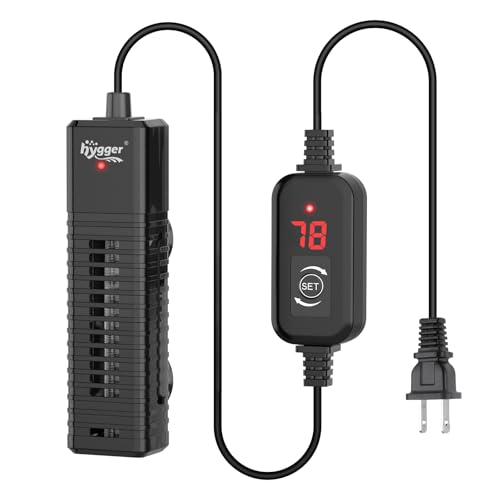
The Nano 50W heater is a compact 4.9 x 1.3 x 0.9-inch unit designed for 5–10 gallon tanks. It features a low-profile design and real-time temperature monitoring via a digital display. It includes an alarm, low-water safety reminder, and good temperature accuracy (±2°F). Best for small betta, shrimp, or shallow-water setups where minimal intrusion is key.
Who it’s best for: very small tanks or tanks where aesthetics require minimal heater visibility. Why selected: strong safety features and tight integration with a digital temperature readout in a tiny package.
Cautions or limitations: higher-end accuracy demands careful placement and calibration; in heavily filtered or turbulent tanks, readings may drift slightly, requiring occasional checks.
Buying Guide
What size should you choose for a 10-gallon tank?
For a 10-gallon tank, a heater in the 50W–100W range is typically appropriate, depending on room temperature and stocking level. A heater with auto-adjust or thermostat control helps maintain a stable temperature with fewer manual tweaks.
What safety features matter most?
- Overheat protection and low-water warnings prevent animals from being exposed to unsafe conditions.
- Dry-run protection and real-time temperature readouts help detect problems early.
- Shatter-resistant quartz glass and robust housings improve durability in high-use tanks.
Where should the heater be placed?
Position the heater horizontally or vertically near a water flow obstacle to ensure even distribution. Avoid placing directly behind rocks or decor where water circulation is weak, as uneven heating can occur.
Is a separate thermometer recommended?
Yes. A separate thermometer helps verify that the heater maintains the target temperature. Relying solely on the heater’s built-in indicator can be misleading in some situations.
What are common trade-offs?
- Higher wattage covers cooler rooms but risks overheating a small volume; pairing with precise thermostats mitigates this.
- Smaller, compact heaters save space but may have fewer features; larger mid-range models often provide better stability for 10 gallons.
What about mixed aquatic environments?
For saltwater or brackish setups, ensure the heater is rated for marine use and resistant to corrosion. Some units explicitly state compatibility with both freshwater and marine environments, which is preferable for flexible setups.
Quick answers to common questions
- Q: Can I use a 50W heater in a 10-gallon tank in a warm room? A: Yes, but monitor the actual water temperature and adjust as needed to avoid overheating.
- Q: Do digital displays improve reliability? A: They help track real-time temperatures, but always verify with an independent thermometer.
- Q: Is a 100W heater too strong for 10 gallons? A: It can be, especially in a warm room or with light stock; choose 50W–75W if you’re uncertain.
- Q: Should I choose a heater with an alarm? A: Alarms add safety by signaling faults or low-water conditions, which is useful in busy tanks.
- Q: How often should I check the heater? A: Check weekly and after water changes to confirm consistent temperature and function.
Summary table of key buying considerations
- Tank size compatibility: Aim for 50W–75W as a comfortable default for 10 gallons in average room temps.
- Safety features: Look for auto shutoff, dry-run protection, and alarms for best ongoing reliability.
- Temperature range: Prefer models offering at least 65°F–89°F or 68°F–93°F to cover seasonal changes.
- Maintenance needs: Choose units with straightforward dial controls and clear indicators for easy upkeep.
- Marine suitability: If you keep saltwater or brackish setups, verify marine compatibility and corrosion resistance.
FAQ
- How many watts should a heater have for a 10-gallon tank? A: Most hobbyists use 50W to 75W as a baseline; adjust based on room temperature and stocking.
- Do heaters work better with a thermostat? A: Yes, thermostats provide precise control, reducing fluctuations and energy use.
- Is a submersible heater safer than a hanging one? A: Submersible designs are typical for planted and heavily stocked tanks, and generally safer when properly installed.
- Can I use two smaller heaters in one 10-gallon tank? A: It’s possible to split heating duties, but ensure even distribution and correct temp monitoring to avoid hotspots.
- Should I replace an older heater? A: If it shows signs of damage, irregular temperature, or poor control, replacement is advised for reliability and safety.