Answering the question: which self-feeding fish food options deliver reliable nutrition while you’re away, and which are best for your fish’s size and tank setup. This guide highlights top automatic and slow-release feeders designed for tropical fish, Bettas, and larger tanks. The selections below are chosen for ease of use, consistency, and water quality control. Suitable buyers include busy homeowners, frequent travelers, apartment dwellers, and beginner aquarists seeking dependable fish care during absences.
| Product | Best For | Why Included |
|---|---|---|
| Aqueon 7 Day Vacation Feeder Slow-Release | Tropical fish in standard tanks | Balanced slow release to reduce waste and encourage color expression. |
| Tetra Weekend and Vacation Feeder (1.06 oz) | Aquariums up to two weeks away | Gel block nourishes for up to 14 days with immune-supporting nutrients. |
| FISHNOSH Automatic Fish Feeder (Model-ML) | Small to medium tanks and ponds | Programmable; simple refill; good for routine timing without screens. |
| Zoo Med Betta Banquet Blocks (Set of 2) | Bettas and small tanks | Block-based feeding with krill and shrimp; designed for betta diets. |
| Petbank Automatic Fish Feeder | Varied foods and precise portions | Moisture-proof, 16-grid system for multiple meals and precise portions. |
Aqueon 7 Day Vacation Feeder Slow-Release Fish Food
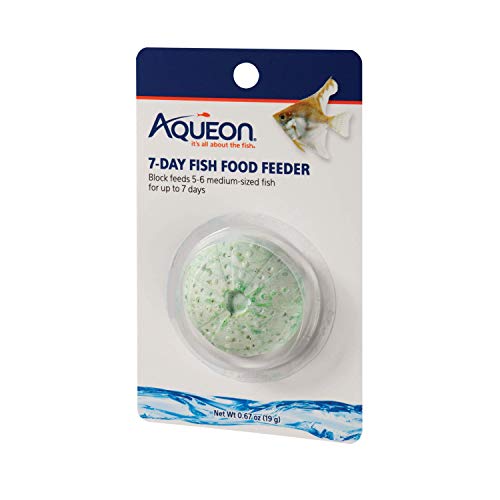
Best for: Tropical fish in standard community tanks. Features focus on nutritious ingredients that attract fish, color enhancement, and reduced waste. The feeder’s slow-release design aims to feed fish evenly across days without polluting water. Consider if you keep small to mid-size tropical species and want steady feeding with minimal overflow. A potential limitation is that feeding schedules are fixed to seven days; extended trips may require an additional feeding plan.
Tetra Weekend and Vacation Feeder Slow-Release Fish Food for Tropical Fish 1.06 Ounce

Best for: Tank owners who want up to 14 days of covered feeding with a gel block that nourishes without dissolving on its own. The block is designed to release food only when fish nibble, helping maintain water quality. Choose this option if you prefer a straightforward, no-programming approach. Caution: if you have very fast-eating species, a shorter trip might still require supervision or backup feeding.
FISHNOSH Automatic Fish Feeder (Model-ML)

Best for: Small to medium aquariums needing a stress-free feeding schedule for up to three daily feedings. This model emphasizes ease of use and a simple refill process, making it suitable for beginners and busy households. A caveat: it does not include a display screen, so setup relies on manual timers and the built-in window system. Best used with stable, well-balanced tanks to avoid overfeeding risk.
Zoo Med Betta Banquet Blocks (Set Of 2)

Best for: Bettas and small tanks requiring a compact, water-friendly feeding method. The blocks dissolve gradually to release micro betta pellets with vitamins and minerals. This option is ideal for solo betta tanks or community tanks with a betta as a non-disruptive feeder. Limitation: designed specifically for bettas; not ideal for larger tropical species or multi-fish communities with higher feeding demands.
Petbank Automatic Fish Feeder

Best for: Diverse tank setups needing precise portion control and moisture resistance. The Petbank feeder uses a 16-grid system, storing a range of food types with accurate dispensing (about 2 g per grid). It offers two mounting options (clamp base or suction cup) and a moisture-sealed design to prevent clogging. Choose this if you want a versatile feeder that handles various foods and long storage. Caution: not recommended for shrimp pellets or flakes in some configurations, so verify your food type before purchasing.
Buying Guide: Key Purchase Considerations
- Tank size and fish type: Larger tanks or fast-einning fish may need more frequent feedings or higher-capacity feeders.
- Food compatibility: Ensure the feeder supports your specific food form (pellets, blocks, flakes, pellets mixed with water-sensitive foods).
- Power and backup: Check whether the device is battery-powered or USB/rechargeable and if there’s a manual backup in case of power loss.
- Program flexibility: Some models offer multiple daily feedings and adjustable portion sizes, while others rely on fixed blocks or presets.
- Water quality impact: Gel blocks and dissolving forms can affect water chemistry; consider your tank’s filtration and weekly maintenance schedule.
- Installation options: Look for adjustable clamps or suction-based mounts to fit your aquarium rim or lid design.
- Maintenance: Refill and cleaning ease influence long-term reliability; choose models with clear refilling windows and accessible chambers.
Frequently Asked Questions
- How long can a vacation feeder reliably feed tropical fish? Generally up to 7–14 days depending on the model and block size.
- Are gel blocks better than traditional plaster feeders? Gel blocks tend not to dissolve and pollute water as readily as plaster; they can maintain water quality better when used correctly.
- Can automatic feeders handle bettas? Yes, several models are designed for betta fish diets, but ensure portion size is appropriate to avoid overfeeding.
- What is the best option for multi-fish tanks with varying feeding needs? A programmable feeder with adjustable portion control and multiple daily feedings works best.
- Do these feeders require a power source? Many rely on batteries or USB power; check the product specs for battery life and recharge options.
- Is moisture protection important for all feeders? Yes for most, especially those storing pellets or powders, to prevent clumping and jams.