Answering your need for reliable, easy-to-read temperature monitoring with alarms, this guide highlights top aquariums thermometers that combine accuracy, alert features, and simple setup. These picks are best for hobbyists managing Betta tanks, reef setups, or mixed species aquariums. A quick summary table below shows the five selected products and their standout uses.
| Product | Best For | Key Feature | Why It Stands Out |
|---|---|---|---|
| Aquarium Thermometer Digital with Motion Sensor for Glass Tank | Betta and small tanks | Motion-activated display, ±1℉ | Cordless design keeps wires out of water; bright readings day or night. |
| Aquarium Digital Thermometer with LED Touch Screen | Nano and reef tanks | LED touch screen, pre-set HI/LO alarms | Clear alerts, waterproof exterior sensor, no wires in water. |
| PAIZOO Fish Tank Digital Thermometer | General freshwater setups | LED display, 0–140°F range, 0.9°F accuracy | Simple, outside-of-tank placement with quick readouts. |
| AQUANEAT 2 Pack Digital Thermometer | Multiple tanks or terrarium setups | Large LCD, suction-cup probe | Two-pack option for broader monitoring needs. |
| QZQ Fish Tank Thermometer Wireless Touch | Compact tanks and aquascapes | Wireless, LED display, ±1°F | Low-profile, easy external placement with real-time updates. |
Aquarium Thermometer Digital With Motion Sensor

Best for small glass tanks where wires pose a risk to curious fish. This thermometer uses a cordless design, keeping the water free of tangled cords and providing a clean aquarium environment. It features automatic screen illumination when the probe detects movement, and a calibration function for precise control of tank temperature. It reads in Celsius or Fahrenheit and supports four brightness levels for day and night visibility. The device is accurate to ±1°F, making it suitable for hobbyists who require dependable readings without frequent adjustments.
Who this is best for: hobbyists who want a wire-free solution in small setups and prioritize clear, adjustable visibility. Why selected: combines motion-activated readability with reliable calibration and a simple switch between units. Caution: ensure the probe is positioned where it won’t be disturbed by tank decor or filter flow to maintain stability.
Aquarium Digital Thermometer With LED Touch Screen
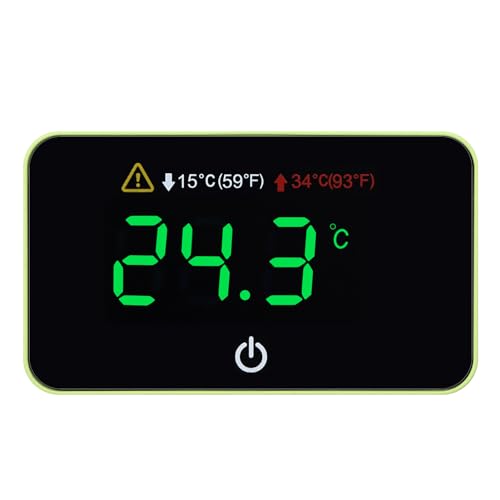
This model stands out in reef and betta environments where precise alerts and quick reads matter. It uses a smart LED touch screen with auto-dimming for comfortable viewing, a wide 150° viewing angle, and a power-saving sleep mode after 10 seconds. It provides HI/LO temperature alarms (±1°F accuracy) and features an IP67 waterproof exterior with a cordless design. The thermometer is intended to be mounted outside the tank, using a battery-powered sensor, which helps prevent corrosion risk and simplifies installation.
Who this is best for: reef aquariums or sensitive species requiring steady monitoring with visible alarms. Why selected: easy-to-read display, strong alarm features, and saltwater compatibility. Caution: relies on CR2032 battery; monitor battery life and replace as needed to preserve alarms.
PAIZOO Fish Tank Digital Thermometer

Best for general freshwater setups where an unobtrusive, accurate readout is desired. The PAIZOO thermometer uses an LED display for easy reading day or night and operates with a cordless, stick-on outside-the-tank design. It covers 0–140°F with an accuracy of ±0.9°F and updates within about five seconds, enabling quick spotting of temperature changes. It is energy-efficient and designed to minimize intrusions into the tank’s beloved ecosystem.
Who this is best for: hobbyists seeking a straightforward, outside-the-tank thermometer with fast updates. Why selected: strong readability and precise external measurement. Caution: placement below water level requires careful adhesion to ensure a stable reading and protect the sensor from abrupt temperature shifts.
AQUANEAT 2 Pack Aquarium Thermometer

Well suited for multiple tanks or terrarium setups, this two-pack from AQUANEAT provides a large LCD display for easy reading and a suction-cup probe for versatile placement. It is designed for wide application, suitable for freshwater, saltwater, and marine environments, with simple submersion and readout. Because the thermometer is external, it minimizes water contact and simplifies maintenance. It is best for users who want to monitor more than one habitat without sacrificing readability.
Who this is best for: keepers managing several tanks or mixed habitats. Why selected: value and flexibility with a two-pack option. Caution: ensure suction cups remain firmly attached to maintain accurate readings over time.
QZQ Fish Tank Thermometer Wireless Touch

This wireless touch thermometer is designed for clean, low-profile monitoring with a clear LED display and a simple touch power button. It reads in Fahrenheit or Celsius and offers real-time monitoring with a ±1°F accuracy. The device is intended for placement outside the tank to avoid water contact while still delivering accurate measurements. It is best for compact tanks where visible, quick temperature checks are necessary without intruding into the aquarium’s interior.
Who this is best for: aquarists who want a discreet, wireless solution for small, aesthetic tanks. Why selected: minimal setup with straightforward real-time readings. Caution: ensure the external sensor remains away from direct heat sources or strong currents that could affect readings.
Buying Guide: Key Considerations For Choosing An Aquarium Thermometer With Alarm
- Display readability: Look for large, high-contrast LCD/LED displays with night-friendly backlighting to read temperatures at a glance.
- Alarm types: Choose devices with adjustable HI/LO alarms and audible or visual alerts to prevent unnoticed temperature swings.
- Placement: Decide between external (outside the tank) or internal units. External units reduce water contact risk but require secure mounting and stable sensing.
- Power and connectivity: Cordless/battery-powered models minimize water exposure but consider battery life and ease of replacement. Some models offer WiFi or app alerts for off-site monitoring.
- Accuracy and range: Check the stated accuracy (commonly ±0.5–1°F) and the temperature range to ensure compatibility with your species’ needs.
- Durability: For saltwater or terrarium use, ensure the device is water-resistant or waterproof (IP67 or higher) to withstand moisture exposure.
- Sampling speed: Faster update rates (e.g., 5 seconds) help detect rapid changes and reduce stress for sensitive species.
- Installation practicality: Suction cups, adhesive backs, or stick-on design should suit your tank’s size and layout without obstructing equipment.
FAQ
- What is a typical acceptable temperature range for most freshwater aquariums?
Most tropical freshwater tanks aim around 76–78°F (24–26°C), but requirements vary by species. Always confirm with your aquatic inhabitants’ needs.
- Do thermometer alarms help prevent fish stress from heating issues?
Yes. Alarms alert you to heater failures or sudden temperature rises that can stress or harm fish, enabling quick corrective action.
- Is it better to mount a thermometer inside or outside the aquarium?
Outside-mounted devices reduce water-contact risk and corrosion, but ensure the sensor accurately reflects water temperature for reliable readings.
- How often should I check thermometer readings?
Daily checks are recommended, with immediate review if an alarm is triggered. Regular cross-checks with a second thermometer can verify accuracy.
- Can I use these thermometers for terrariums or paludariums?
Many models support humid or semi-aquatic environments, but verify IP rating and water exposure tolerance for each setup.