Answering your koi pond water testing needs starts with choosing reliable test strips that deliver quick, interpretable results. This guide highlights five top options, each suited to different pond sizes, fish loads, and maintenance routines. Whether you’re a casual hobbyist or a serious koi keeper, these kits help you monitor pH, ammonia, nitrates, nitrites, and other critical parameters to prevent common issues. The selection below emphasizes accuracy, ease of use, and practical guidance for real-world pond care.
Summary table of selected products:
- AQUAVERITY 7-in-1 Pond Test Strips — 7 parameters, fast results, easy color chart.
- API POND 5 IN 1 POND TEST STRIPS — Essential 5-in-1 tests, compact kit.
- HALF OFF PONDS Pond Water Test Kit — 4-in-1 with comprehensive test range and glass tubes.
- Aquatic Eden Pond Test Strips — 7-in-1, dual freshwater/saltwater use.
- LabBestest Aquarium Test Strips — 7-way professional strips with fast results.
AQUAVERITY 7-in-1 Pond Test Strips

The AQUAVERITY kit provides seven essential measurements: pH, nitrate, nitrite, carbonate, hardness, total chlorine, and free chlorine. It is designed for koi ponds, garden ponds, and aquariums, delivering results in about a minute. Best for hobbyists who want a straightforward, reliable way to track multiple water parameters with one strip. Its resealable container helps maintain strip freshness for long-term use.
Best for: Small to medium koi ponds where quick, multi-parameter snapshots are needed without complex equipment. The 60-second read time and 7-in-1 coverage simplify routine monitoring.
Caution: The kit uses color charts that require good lighting for accurate interpretation; avoid dim or muddy viewing conditions for best results.
Pond Test Strips – 7-1 Kit by JNW Direct

This 7-in-1 kit covers hardness, carbonate, chlorine (total and free), nitrite, pH, nitrate, and alkalinity. It’s designed for ponds and fish tanks, with a color chart designed for straightforward readings. The kit is well-suited for ongoing maintenance where quick, repeatable readings are valued. Reading accuracy depends on prompt comparison to the chart after dipping.
Best for: Pond keepers who want a clear, repeatable reading process and a single kit that works across ponds and aquariums. Choose this if you value a simple procedure and a broad parameter set.
Caution: Some users may find color interpretation challenging in certain lighting; ensure consistent lighting when reading results.
API POND 5 IN 1 POND TEST STRIPS
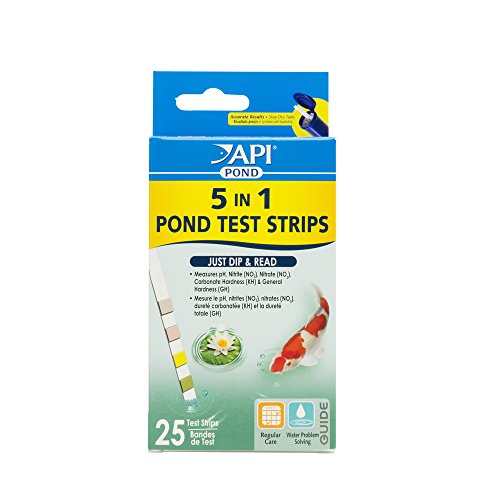
The API POND 5 IN 1 kit focuses on five key water quality indicators: pH, nitrite, nitrate, carbonate hardness, and general hardness. This compact option is designed to help pond owners monitor common problem areas that can affect koi health, such as pH swings and nitrate buildup. It supports regular testing to spot trends over time.
Best for: Ponds where a lean, essential test set is preferred, or as a starter kit before expanding to more parameters. It’s a solid choice for mapping basic water quality trends.
Caution: It does not measure ammonia directly, so you may need an additional test if ammonia spikes are a concern in your system.
HALF OFF PONDS Pond Water Test Kit
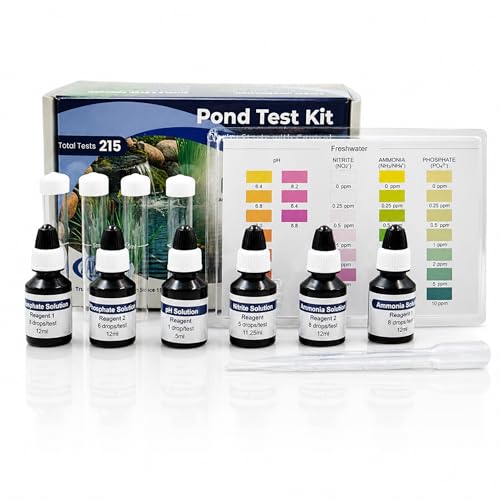
This 4-in-1 kit checks pH, ammonia, nitrite, and phosphate, offering glass test tubes for precise color matching. It’s designed for freshwater ponds and koi ponds where ammonia management is critical after feeding or filter maintenance. The kit’s 215 total tests provide long-term testing coverage for ongoing pond maintenance.
Best for: Koi ponds where ammonia control is a priority and a traditional color-matching method feels more reliable to the user. It is a practical choice for routine checks and hobbyist setups.
Caution: The 4-in-1 scope means you’ll need additional tools if you want to monitor nitrates or other parameters not included in this kit.
AAwipes 8-in-1 Aquarium Test Kit

This 8-in-1 kit tests free chlorine, nitrate, nitrite, hardness, carbonate, total alkalinity, pH, and ammonia nitrogen. It’s designed for both freshwater and ponds, making it a versatile option for mixed setups or households with multiple aquatic environments. The color-moding system aims to deliver fast, actionable readings.
Best for: Users who need a broad, high-coverage kit across multiple water systems and maintain both ponds and aquariums with a single testing solution.
Caution: Reading ammonia and nitrite accurately may require careful timing and adherence to the kit’s step-by-step procedure for best results.
Pond Test Strips 7-in-1 (Aquatic Eden)

Each Aquatic Eden kit includes 50 strips for testing seven parameters: free chlorine, nitrate, nitrite, hardness, total alkalinity, pH, and sodium chloride. It covers both freshwater and saltwater environments, making it a flexible option for ponds with varying water sources. The kit emphasizes quick results, with a reading process designed to be completed in under a minute.
Best for: Pond owners who need a versatile, all-in-one strip set that can handle different water types and is suitable for koi ponds and outdoor ponds.
Caution: As with other strip tests, ensure consistent lighting when interpreting color charts to avoid misreadings.
Buying Guide: Key Considerations For Koi Pond Water Testing
- What tests are essential for koi ponds? Essential tests typically include pH, ammonia, nitrite, nitrate, and general hardness. Alkalinity helps stabilize pH, while chlorine levels indicate disinfection needs. Consider kits that combine these into convenient 4-7 parameter sets and add ammonia if your pond has heavy feeding or filtration cycles.
- Strip tests vs liquid tests: Strips are quick and simple, ideal for routine checks. Liquid test kits can offer high precision and may be better when you need more exact measurements. For koi ponds, a mix of both approaches can balance speed and accuracy.
- How often should I test? For new ponds or after major changes (water changes, filter work, or new fish), test daily for a week, then reduce to weekly maintenance. Increase frequency after heavy feeding or seasonal shifts.
- Reading accuracy: Color-chart interpretation depends on lighting. Use bright, neutral lighting and lay strips on a white background for comparison. Record readings to spot trends over time.
- Maintenance and storage: Keep strips in their sealed container away from moisture and heat. Replace strips before expiration and avoid exposure to air that could degrade reagents.
- Best practice: Maintain a pond log with date, weather, recent changes, and test results. This helps correlate water quality with fish behavior or plant health.
Frequently Asked Questions
- How often should I test koi pond water? Regular testing recommends weekly checks, with increased frequency after water changes, feeding, or weather events that perturb water quality.
- Do I need to test ammonia separately? Ammonia monitoring is important, especially in new ponds, during stocking, or after large feedings. Some 7-in-1 kits include ammonia, while others require a separate test.
- Which parameter is most critical for koi health? Ammonia and pH are typically critical; high ammonia is toxic to koi, and unstable pH can stress fish and disrupt beneficial bacteria.
- Can I use pond test strips for a fish tank? Yes, many pond strips are designed to work in both ponds and freshwater aquariums, but confirm the kit’s compatibility on the packaging.
- What should I do if test results indicate poor water quality? Perform immediate actions such as partial water changes, cleaning filters, reducing feeding, and retesting to confirm trends before taking long-term steps.
- Are color charts reliable? Color charts are generally reliable but can be influenced by lighting. Compare results in a consistent lighting condition and, if possible, use a color-calibrated comparison method.