Finding the right filter for a 125 gallon aquarium involves balancing flow rate, filtration stages, ease of maintenance, and reliability. In this guide, five prominent canister, internal, and multi-stage filters are examined for large tanks. Each option supports strong biological, mechanical, and chemical filtration while catering to different tank setups, from reef-ready to freshwater communities. The selections emphasize real-world performance, quiet operation, and user-friendly maintenance to keep your 125 gallon habitat pristine.
| Product | Brand | Type | Approx. Flow | Key Strengths |
|---|---|---|---|---|
| Fluval FX2 High Performance Canister Filter | Fluval | Canister | 475 US Gal/hour | Multi-stage filtration, Smart Pump technology, water-change system |
| Aulofee Internal Aquarium Filter | Aulofee | Internal | 450 GPH | 6-in-1 design, ultra-quiet, check valve for maintenance |
| Marineland Penguin Bio-Wheel Power Filter | MarineLand | Hang-on / Internal | Variable (bio-wheel based) | Rotating bio-wheel for biological filtration, multi-stage |
| SeaChem Tidal 110 Gallon by Sicce | Seachem | Internal | Self-priming, adjustable flow | Bottom-to-top flow, self-cleaning impeller |
| coospider-repta 660GPH Aquarium Filter | coospider-repta | External/Canister style | 660 GPH | UV sterilization option, algae control, large-volume filtration |
Choosing a filter for a 125 gallon tank means ensuring the unit can move enough water to keep debris in suspension for effective filtration while also handling the biological load of your livestock. While larger tanks benefit from higher flow and multiple stages, noise, power consumption, and ease of maintenance also matter. The following product sections explore five solid options, detailing design elements, filtration approach, and practical considerations for American hobbyists.
Fluval FX2 High Performance Canister Filter

The Fluval FX2 is designed for large aquariums, delivering up to 475 US gallons per hour. Its multi-stage filtration combines mechanical, biological, and chemical media in a robust canister layout. A built-in powered water-change system simplifies regular maintenance, enabling effortless removal and replacement of water without disturbing livestock. Smart Pump technology continuously monitors performance and auto-optimizes flow, while auto-bleed features help evacuate trapped air every 12 hours to maximize efficiency. The base drainage design supports convenient water changes directly from the canister.
In practice, the FX2 excels in larger community tanks, maps well to heavily stocked setups, and provides a predictable flow that supports both freshwater and larger reef configurations. The basket-in-basket tray design keeps maintenance organized and accessible. For keepers prioritizing automation and minimal hand-on-time, this model is a strong, all-around pick.
Aulofee Internal Aquarium Filter

The Aulofee internal filter targets 50–150 gallon aquariums with a strong 450 GPH circulation. Its 6-in-1 design integrates filtration, oxygenation, wave-making, debris collection, water movement, and water changes. A bottom debris tray catches visible waste, while a built-in check valve helps maintain water in the tank during maintenance. Ultra-quiet operation (<25 dB) minimizes disturbance in living rooms or bedrooms. An adjustable outlet directs flow, enabling targeted filtration without stressing small or shy fish.
For tanks where external canister fixtures aren’t ideal or space is restricted, the internal unit offers straightforward setup and reliable performance. It balances powerful filtration with quiet operation, making it suitable for large community tanks, turtle habitats, or mixed freshwater-saltwater systems that require steady turnover without bulkier equipment.
Marineland Penguin Bio-Wheel Power Filter
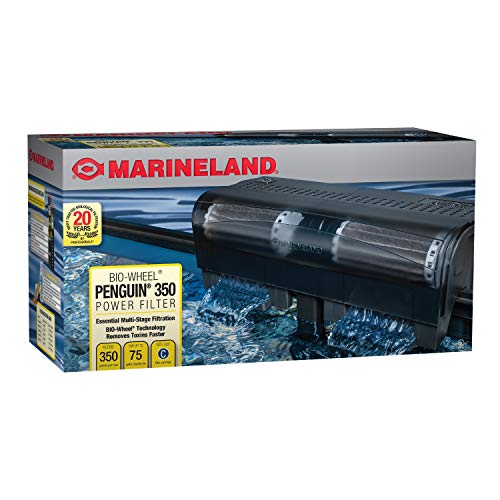
The Marineland Penguin uses rotating Bio-Wheel technology to provide efficient biological filtration, complemented by mechanical and chemical filtration stages. The Bio-Wheel design creates a large surface area for beneficial bacteria, promoting a stable nitrogen cycle in the aquarium. This unit is popular in larger community tanks and is known for reliable performance with moderate noise levels and straightforward maintenance. The multi-stage filtration support ensures a balanced environment for fish and plants alike, though some hobbyists may pair it with additional mechanical media for higher clarity in heavily stocked tanks.
Pros include easy installation, consistent filtration, and a compact footprint that suits many home setups. A practical choice for hobbyists upgrading from smaller systems who want a dependable brand with a long history in the hobby. It is particularly suitable for tanks that prioritize quick biological activation and simple routine upkeep.
SeaChem Tidal 110 Gallon Filtration by Sicce

The SeaChem Tidal 110 Gallon unit emphasizes bottom-to-top flow with an adjustable leveling device. A self-cleaning impeller and self-priming pump streamline operation, making maintenance easier for hobbyists managing larger tanks. The design supports stable surface agitation and efficient filtration across multiple media options, ensuring clear water and a healthy environment for diverse species. It’s a good fit for households seeking a compact internal filtration solution with adaptable flow control in 125-gallon setups.
Tank owners may appreciate the balanced approach to circulation, easy priming, and straightforward media replacement. The unit’s reliability under continuous operation makes it a sensible choice for fish-only and mixed-aquatic systems, especially where space or aesthetics favor a built-in solution rather than a bulky external canister.
coospider-repta 660GPH Aquarium Filter

The coospider-repta 660GPH filter is designed for large tanks, including those in the 125–400 gallon range. It combines high flow with options like UV sterilization for algae control and additional media compartments to customize filtration. The 24V DC pump provides reliable performance while conserving power, and the unit’s 4-in-1 approach includes algae removal, water circulation, and filtration. This makes it attractive for hobbyists seeking robust filtration with the potential to manage pond-style tanks or koi setups that demand strong turnover and clarity.
Considerations include the availability of UV options, space for installation, and the ongoing costs of media replacements. For reef or freshwater tanks with heavy bioload, this model offers a strong filtration backbone with the flexibility to upgrade media as needed.
Buying Guide: Key Considerations For 125 Gallon Tanks
- Flow rate and turnover: Aim for 4–8 times the tank volume per hour in a well-balanced system. A 125 gallon tank benefits from 500–1000 GPH total filtration capacity, depending on livestock and bio-load.
- Filtration stages: A combination of mechanical, biological, and chemical media yields the best long-term water quality. Canister filters excel at multi-stage setups; internal and hang-on options are often more compact.
- Maintenance convenience: Look for features like auto-bleed, self-priming pumps, and easy-access media baskets. Consider ease of water changes, drain valves, and media customization.
- Noise and power consumption: Quiet operation is important for living spaces. Check dB ratings and energy draw, especially for long-term use.
- Media compatibility and upgrades: Ensure the filter supports various media types (bio-media, activated carbon, ceramics) and has room for future upgrades as your tank evolves.
- Tank inhabitants: Heavily stocked freshwater communities, large cichlid setups, or reef tanks may require higher flow, robust mechanical filtration, and reliable bio-filtration. Turtle tanks and koi ponds demand stronger filtration and durable components.
- Installation considerations: External canisters require space behind or beside the tank, while internal units save cabinet space but may obscure the view. UV sterilization options can help with algae management in slow-flow setups.
These options illustrate a spectrum of filtration approaches for a 125 gallon aquarium. When choosing, consider your specific livestock, whether you prefer external canisters or internal units, noise tolerance, and maintenance habits. The right filter will deliver clear water, stable chemistry, and a healthier environment for your aquatic ecosystem.