Aquarium maintenance hinges on using compatible, durable filter bags that keep media contained while maximizing water flow. This guide reviews top-rated options across sizes and media types, helping you pick bags that fit your canister, power, or reef filtration systems. Each section highlights key features, compatibility notes, and practical usage tips to support reliable, hassle-free filtration.
Summary of chosen products:
- DEPEPE 10pcs 7.8 x 5.9 Inch Aquarium Filter Media Bags with Zipper for Activated Carbon, Biospheres, Ceramic Rings
- Aquatic Experts High Flow Filter Media Bag – Durable Filter Bags for Fish Tank, Drawstring, 3” x 8” – 4 Pack
- Pawfly 8 Pack Aquarium Filter Media Bags, Fine Mesh, 8″ x 5.5″
- AQUANEAT 10pcs Aquarium Filter Media Bags, Coarse Mesh 5.5″ x 8″
- QIHYCUF 6 Pack Small Sized Filter Bags for Activated Carbon, 3 x 4 inches, 1000 micron
DEPEPE 10pcs Filter Media Bags (7.8×5.9 In)
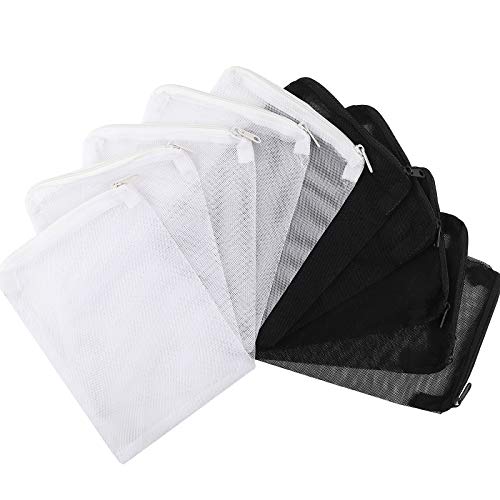
These polyester filter bags come with a zipper, aiding quick filling and secure closure. The package includes five white and five black bags, offering color-coded organization for different media types such as activated carbon or biospheres. Sized at 15 cm by 20 cm (5.9″ x 7.8″), they fit a range of standard canister and sump filters. The durable design supports repeated use in both freshwater and saltwater setups, helping maintain clear water while simplifying maintenance tasks.
Aquatic Experts High Flow Filter Media Bag (3”x8”)

Designed for high flow filtration, this white fabric bag accommodates medium to large media such as pelleted carbon, peat fiber, and resins. Its durable drawstring makes it easy to fill, secure, and reuse. The bag is suitable for sumps, canister filters, and power filters in both freshwater and saltwater tanks. Optimum mesh size supports efficient water flow around media, while the practical 3” x 8” footprint fits a broad range of filtration systems.
Pawfly 8 Pack Aquarium Filter Media Bags (8″ x 5.5″)

This eight-pack offers large bags with a 2 mm mesh hole, suitable for various large media such as activated carbon, bio balls, zeolite, ceramic rings, and crushed coral. The bags are well-sewn from durable polyester with a sturdy plastic zipper, ensuring longevity and reliable containment. They work well across multiple filter setups, including canister, power, and pond filtration systems, enabling flexible, modular media configurations.
AQUANEAT 10pcs Coarse Mesh Filter Bags (5.5”x8”)

These 5.5″ x 8″ bags offer a coarse mesh ideal for larger media like carbon pellets and ceramic media. The 2 mm hole size supports steady water flow while containing media securely. The bags are versatile for various filter types, including canister and pond filtration systems, and are designed for repeated use with easy filling and emptying. They are compatible with freshwater and saltwater setups where robust media containment is needed.
AQUANEAT Extra Fine 100 Micron Filter Bags (3”x8”)

These 3″ x 8″ bags are tailored for extra-fine media, including activated carbon and similar materials. The 1000 micron mesh offers precise filtration while remaining reusable across multiple cleanings. They fit a wide array of filters such as canister, power, and sump systems, as well as pond filtration. The plastic zipper design facilitates quick loading and secure closure, supporting both freshwater and saltwater aquariums.
DEECOOYA QIHYCUF 6 Pack Small Filter Bags (3×4 Inches)

These compact 3″ x 4″ bags are designed for high flow and small media. The 1000 micron mesh supports granulated carbon, zeolite, peat, and other granular media while avoiding finer particles that may pass through. Made from durable nylon, the bags are reusable and easy to fill or empty with a top drawstring. They fit a broad range of filters, from canister to wet/dry systems, making them a versatile choice for compact aquariums or filtration upgrades.
Buying Guide: Key Considerations For Filter Bags
Filter bags influence filtration efficiency, maintenance time, and media compatibility. When selecting bags, consider media type, bag size, mesh density, and filter compatibility. Here are practical perspectives to guide decisions:
- Media compatibility: Match bag mesh and size to the media you plan to use. Coarser bags suit carbon pellets and ceramic rings, while finer mesh is better for denser media like Purigen alternatives or bio media that require more containment.
- Flow vs filtration balance: Larger bags with coarse mesh improve flow but may release media if not secured. Smaller bags with fine mesh can increase filtration efficiency but might restrict flow if overfilled.
- Durability and reuse: Look for bags with reinforced stitching and durable zippers or ties. Reusable bags reduce waste and cost over time compared to disposable options.
- Filter compatibility: Ensure the bag dimensions fit your filter model (canister, sump, or power filter). Some bags are explicitly designed for high-flow systems, while others target compact setups.
- Maintenance ease: Bags with simple filling and removal save time during water changes. Color-coded or clearly labeled bags help you keep media organized by type and purpose.
- Saltwater vs freshwater: Some bags perform consistently in both environments, but saltwater can cause corrosion in metal components and faster wear on fabrics. Prefer bags with corrosion-resistant elements and tested performance in saltwater.
For practical setup, begin with a bag size that fits your filter’s media chamber, fill to a comfortable level, and secure tightly. If you switch media, rinse bags and media separately to prevent nutrient spikes. Consider labeling bags by media type and cleaning schedule to streamline routine maintenance.